
Most specialist contractors test a fire damper at commissioning, once installation is finished, and then at periodic checks every six to twelve months. How often fire dampers should be tested in practice depends on where they sit. A damper in a dusty plant room or a lint-heavy laundry extract can clog between visits without anyone seeing it.
Building owners and managers know their dampers exist. Fewer can say when each one last moved, or whether it would close today.
Why Do Fire Dampers Need Regular Testing?
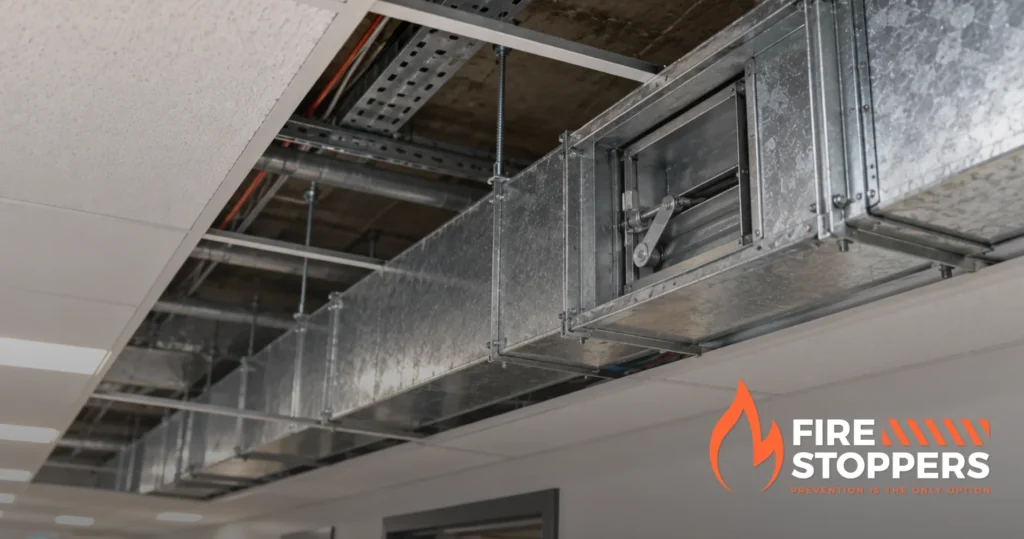
A fire damper sits open in the ductwork all year. Its primary function is to close automatically in the event of a fire. That stops fire spreading through the ventilation system and keeps the wall or floor’s fire rated separation intact.
Fire dampers fail when they have not moved for years, and testing gives you the best chance of catching that before a fire does.
The right testing frequency varies with the damper type, the manufacturer’s instructions and the environment. Ask your contractor which interval they are working to and what it is based on, then record it in your maintenance log.
Insurers and auditors ask when a damper was last tested, and “we think it was done last year” is a weak answer. A signed report is a strong one.
When Do Fire Dampers Need More Frequent Testing?
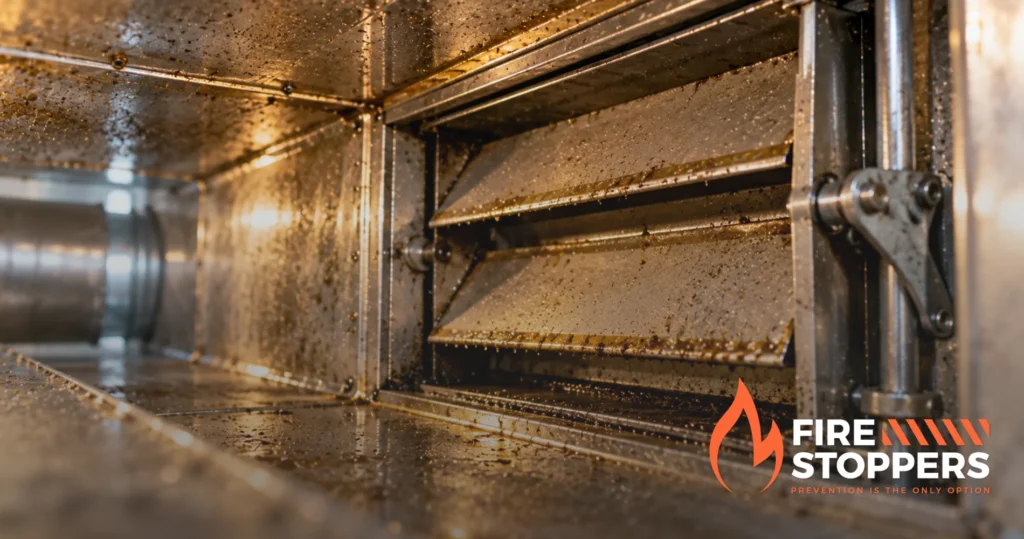
Test more often in dusty or lint-heavy spaces, after building work and after any fault or repair, and have any damper found in a kitchen extract reviewed.
Fire Dampers in Commercial Kitchen Extracts
Commercial kitchen extraction systems carry grease and heat. Conventional fire dampers may be unsuitable for grease-laden extract ductwork, because grease on the fusible link or damper blades can stop a link releasing when it should. If you run kitchens in a hotel, pub or restaurant and find a damper in that position, raise it with your contractor and ask how often it should be checked. For the wider picture in those buildings, read the fire safety in hospitality guide.
Fire Dampers in Dusty and Lint-Heavy Spaces
Workshops, laundries, plant rooms and warehouses pull debris into the ductwork. Dust on the tracks slows the blades, and a slow blade leaves the duct open longer than it should be.
Fire Dampers After Refurbishment or Ductwork Changes
Fit-outs, ceiling replacements and ventilation changes interfere with dampers. A unit that passed in March can be boxed in, painted over or disconnected by June. Offices go through this constantly, and the guide to passive fire protection for commercial offices explains why. Cinemas and theatres with retrofitted ventilation are just as exposed, a risk the fire safety in entertainment venues guide covers in detail.
Fire Dampers With a Fault History or Heavy Wear
A damper that failed a test or has just been repaired deserves a retest soon afterwards, so you know the fix held. Older and heavily used units are subject to wear and tear, so check them on the same shorter schedule.
How Are Fire Dampers Tested?
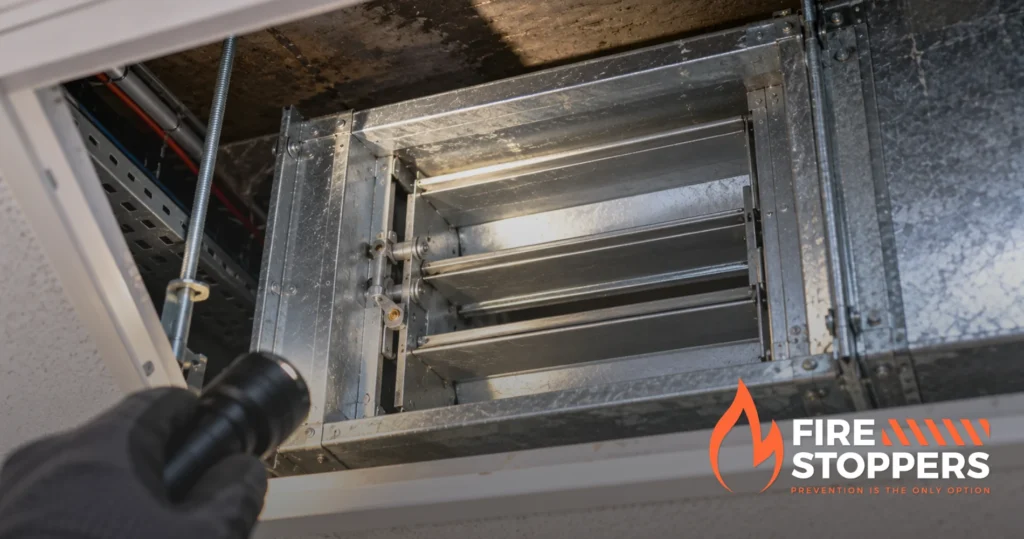
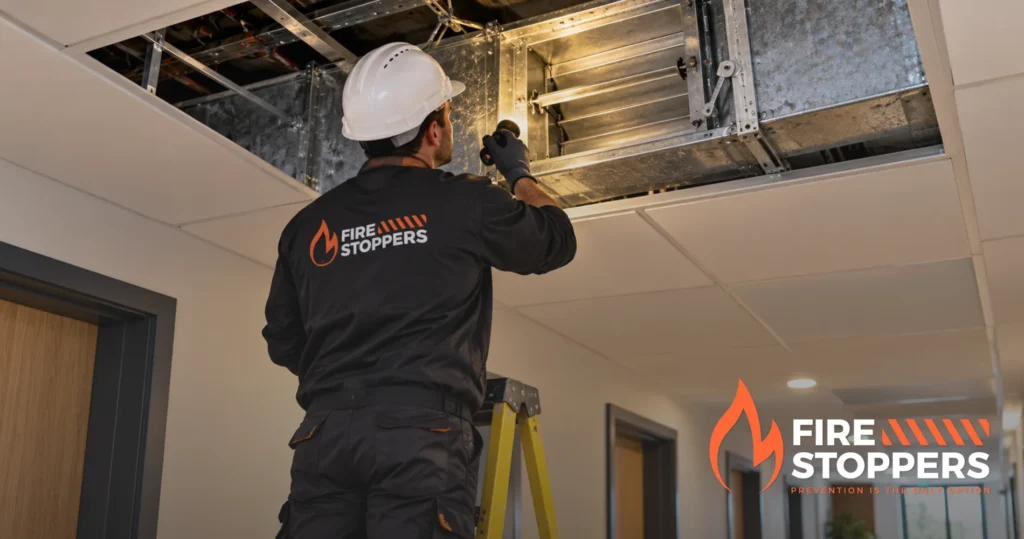
A proper fire damper inspection starts before anyone touches a blade. The engineer works from a list of damper locations, finds each unit behind ceilings, in risers and above plant, and opens the access panel. Dampers nobody can reach? The first finding on many reports.
Next comes a visual check of the casing, damper blades, fusible link and ductwork. Anything that could stop the blades closing gets recorded. After that, the engineer starts physically testing the damper. For a spring-loaded unit, that means a drop test.
What Is a Drop Test on a Fire Damper?
Fire damper drop testing releases the link or mechanism of a spring-loaded damper by hand and lets the blades close, the way heat would close them in a real fire. The correct procedure depends on the damper’s design and the manufacturer’s instructions. The engineer watches for full closure, a secure latch and no gaps where flame from one side could reach the other. Where the damper type allows, the damper is then cleaned, reset to open, refitted with a sound link and lubricated only where the manufacturer specifies.
How Are Motorised Dampers Tested?
Motorised dampers close on a signal rather than heat. The engineer sends that signal and checks the damper control, plus any link to the fire alarm or building management system. Then they confirm the blades close fully before returning the unit to open. A smoke damper in a smoke control system gets its own control checks, and different damper types need different test methods.
How Do You Tell If a Fire Damper Is Faulty?
You usually can’t tell from the floor. Most dampers sit above ceilings or inside risers, and a unit that looks fine can still jam the moment it moves.
An engineer can read a damper’s position through the access panel. One found closed in normal use points to a tripped link or a fault that needs investigating. A few signs are still worth reporting between visits.
Blades That Do Not Close Fully
A gap of any size defeats the purpose of the unit. This is the failure a drop test is designed to catch.
A Damper That Closes Slowly or Sticks
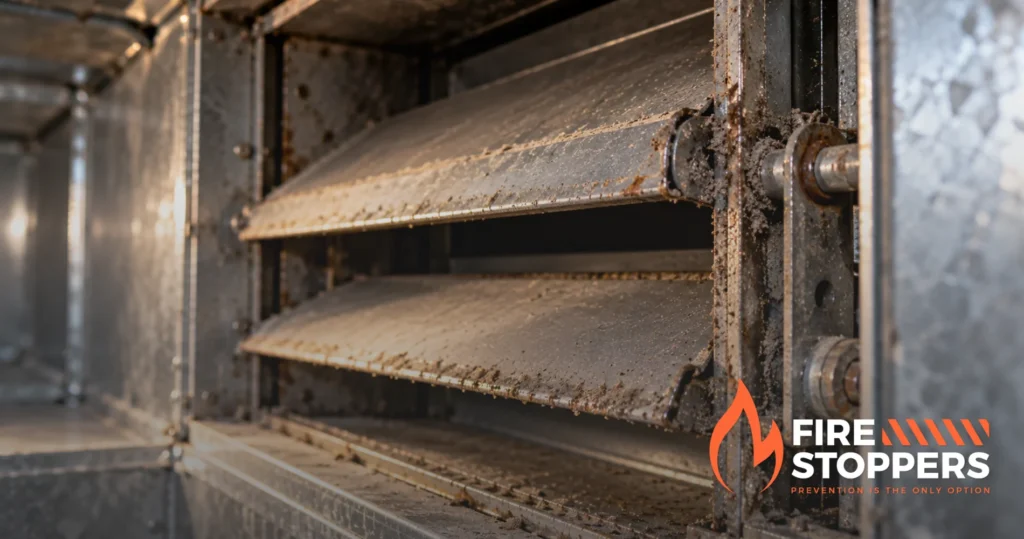
Blades that need a nudge, or drag along their track, won’t move fast enough when a fire starts. Dust and corrosion on the tracks are the common cause.
A Fusible Link That Is Painted or Corroded
Paint from a refurbishment is the usual culprit. A paint-coated or corroded link may not release when heat reaches it, so it needs assessing.
Debris That Blocks the Damper Blades
Insulation offcuts, cable ties and built-up dust inside the damper or duct can all stop a full close. The blades need a clear run to seal.
A Motorised Unit That Ignores Its Signal
If the damper doesn’t respond when the control system calls it, something between the panel and the actuator has failed. An engineer needs to trace the fault before the unit goes back into service.
Any one of these means the unit needs assessing, the right remedial action and a retest. Resetting a failed damper and signing it off leaves the fault unresolved.
What Records Should You Keep After Fire Damper Testing?
A test without a record is hard to prove. Ask your contractor for a report that lists:
- Location and asset ID for every damper
- Date of the test and the engineer who carried it out
- Result for each unit, including any drop test failure
- Damage or obstruction found
- Repairs completed, with before and after photos
- Next due date
Tag each damper as well, so anyone opening a ceiling can see its last test date. Then feed the results into a planned preventative maintenance programme that covers firestopping and fire doors alongside fire damper maintenance.
If your last report is older than the interval your contractor is working to, or you don’t have one, start there.
Fire Damper Testing in Ireland
A fire damper inspection in Ireland needs a specialist passive fire protection contractor who understands both the HVAC side and the fire side. Firestoppers is exactly that. In-house teams test, repair and replace dampers across Ireland, from Dublin to Cork, Limerick, Donegal and beyond.
A multi-site portfolio can use one contractor and one set of reports, so nothing falls between visits. Our fire damper testing and inspection service covers drop testing, reporting, remedial work and damper installation.
Not sure how many dampers your building has? We can start with a comprehensive fire damper inspection of every unit and give you a schedule you can hand to an insurer. The wider passive fire protection can be checked on the same visit.
Ready to find out where your dampers stand? A call to +353 01 8165587 or an email to info@firestoppers.ie is all it takes to book your fire damper test. We’re available Monday to Saturday.