Two systems have to work together for a venue to be genuinely fire safe: active protection, such as alarms and extinguishers, and passive fire protection, built into the fabric of the building itself. Get the passive side wrong, and every other safety measure in a cinema, theatre or concert venue is protecting a structure that’s already failing, quietly, long before anyone smells smoke.
That’s the real answer to fire safety in entertainment venues in Ireland, and it’s not what most fire safety checklists cover. Most operators think they’re covered because they passed their last fire alarm test.
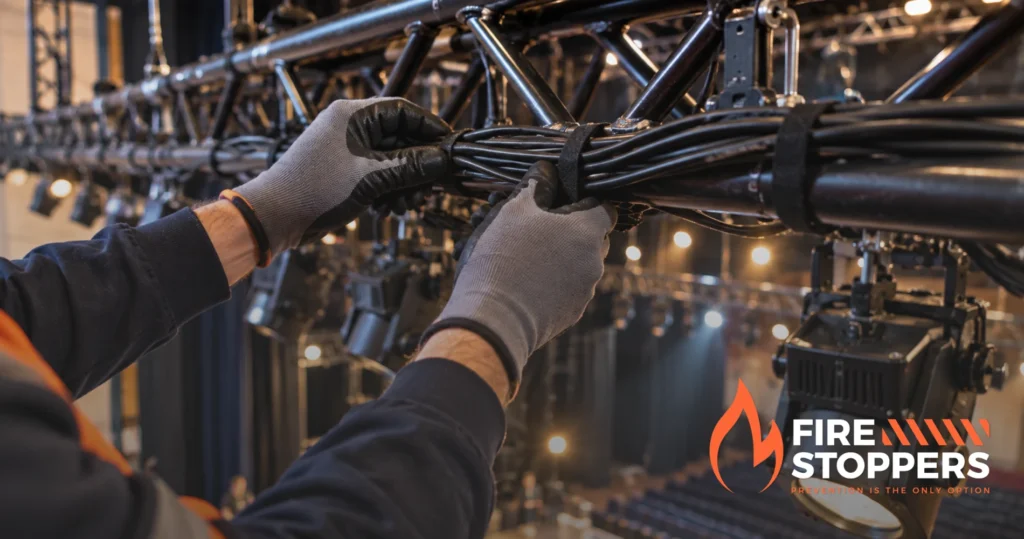
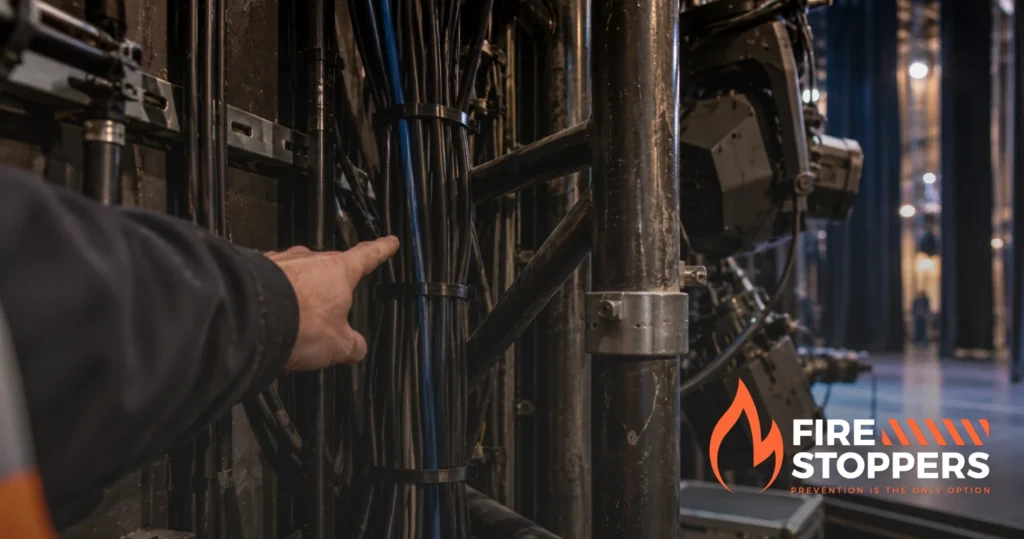
They’re not thinking about the cable bundle behind the lighting rig that was never firestopped after the last AV upgrade, or the cavity barrier removed during an acoustic refit and never replaced. Those are the gaps that turn a contained incident into a building-wide one.
Why Cinemas and Theatres Carry Higher Fire Risk
A venue holding a few hundred people alongside a high-powered lighting rig presents a materially different fire risk profile to a standard office building.
High occupant density sits alongside high-powered lighting rigs, extensive AV cabling, pyrotechnics in some venues, and acoustic treatments designed to trap sound inside a space, which is precisely what you don’t want fire and smoke doing. Standard office buildings have straightforward cable runs and predictable HVAC layouts.
Entertainment venues have control rooms feeding hundreds of data and power cables through fire-rated walls, ductwork sized for auditoriums holding thousands of people, and acoustic cavities that were never designed with fire compartmentation as a priority. Every one of those elements needs proper installation and regular testing, to a standard most people in the building have never heard of.
If your venue also runs bars, catering or overnight stays as part of a wider hospitality operation, our fire safety in hospitality guide covers the broader compliance picture alongside this one.
Fire Safety in Entertainment Venues Goes Beyond Passive Protection
A complete fire safety strategy for a cinema, theatre or concert venue combines several systems working together, not just the passive fire protection this guide focuses on.
Fire detection and alarm systems need to be properly maintained, and emergency lighting kept in working order, so a fire is detected quickly and escape routes stay visible if the power fails. Escape routes and fire exits need to stay clear, correctly signed, and sized for peak occupancy, not the quiet Tuesday matinee.
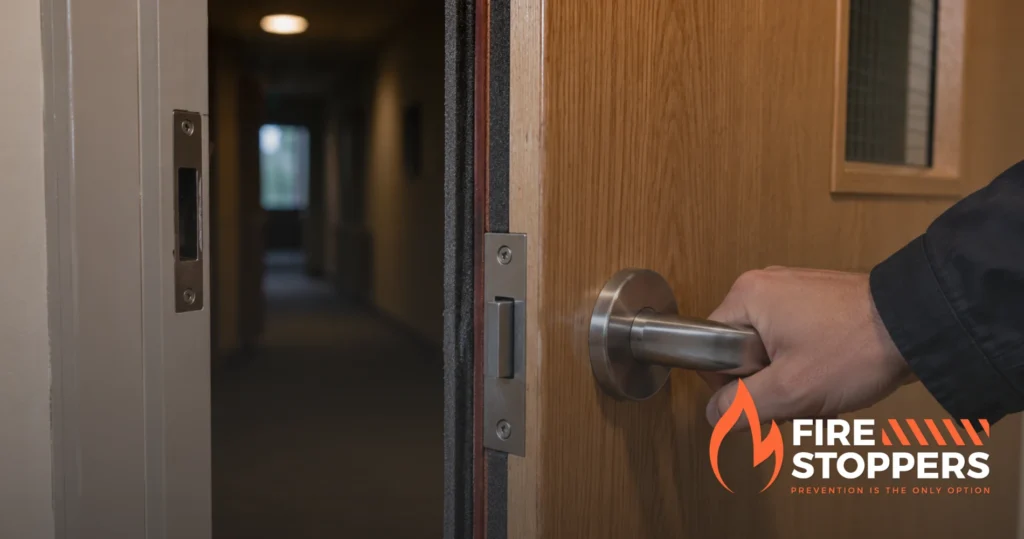
Fire doors need to close fully, latch correctly, and hold their intumescent seals, since a fire door propped open for ventilation during a show provides no protection at all. Staff need a written, rehearsed emergency evacuation plan and trained fire wardens, not a procedure that exists only on paper.
Each of these active and procedural elements works alongside the passive fire protection measures covered in the rest of this guide, not instead of them.
Penetration Seals and Cable Firestopping
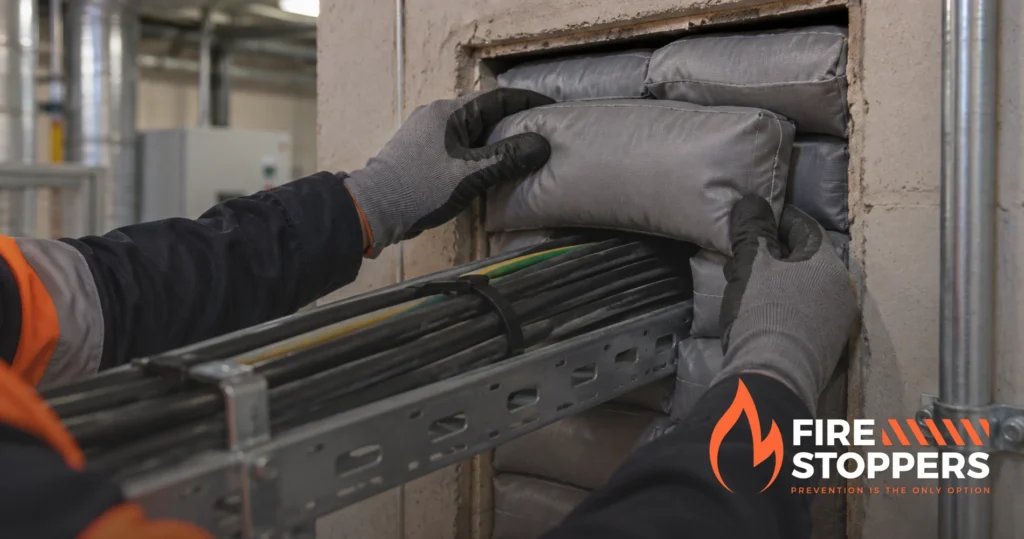
Every cable, pipe or duct that passes through a fire-rated wall or floor creates a hole in that compartment. Left unsealed, it becomes the fastest route for fire and smoke to travel between spaces.
In a venue with a lighting grid, a sound desk and a control room, that’s not one or two penetrations. It’s often hundreds, added incrementally over years of AV upgrades and touring productions plugging in temporary equipment.
Intumescent mastic seals and collars around individual cables and pipes are standard, but where cable trays are large and frequently modified, firestop pillows are the more practical solution: blocks that can be removed and reinstalled as the cabling changes, without leaving the compartment unsealed in the meantime.
The problem isn’t usually the initial installation. It’s what happens afterwards, when a new AV contractor punches through a sealed wall for a touring show and never calls anyone to make it good again.
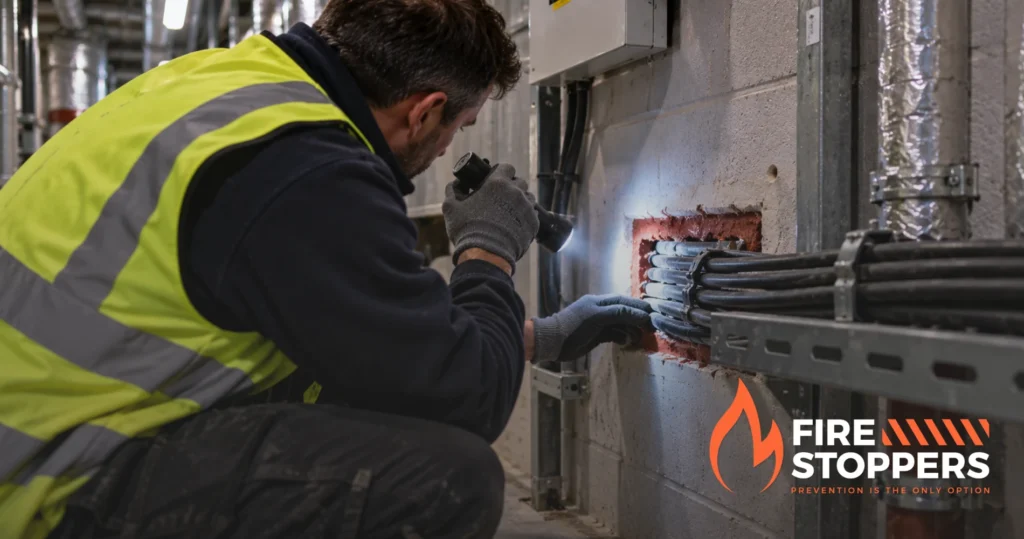
In our own inspections, four issues come up repeatedly: firestopping that was never installed at all around service penetrations added after the original build, incorrect products used in place of certified systems, collars or seals fitted but not fully completed, and previously compliant seals disturbed by later works and never made good again. For more detail on how these penetrations should be sealed, see our guide to fire stopping around pipes and cables.
Fire and Smoke Dampers in Venue HVAC Systems
Ductwork doesn’t stop for a fire-rated wall. It has to cross one, often several times, to ventilate an auditorium built for a few thousand people, and every crossing needs a damper that closes automatically when heat or smoke is detected, sealing the compartment the same way a fire door does.
Dampers can fail without any visible sign of malfunction. A damper that’s stuck open from years without testing looks identical to a working one until the moment it’s needed. Venues with complex, retrofitted HVAC systems, which describes most Irish cinemas and theatres built or extended over the past few decades, are exactly where this gets missed. Damper testing and inspection should form part of a scheduled maintenance programme, not a one-off check.
Cavity Barriers and the Acoustic Trade-Off
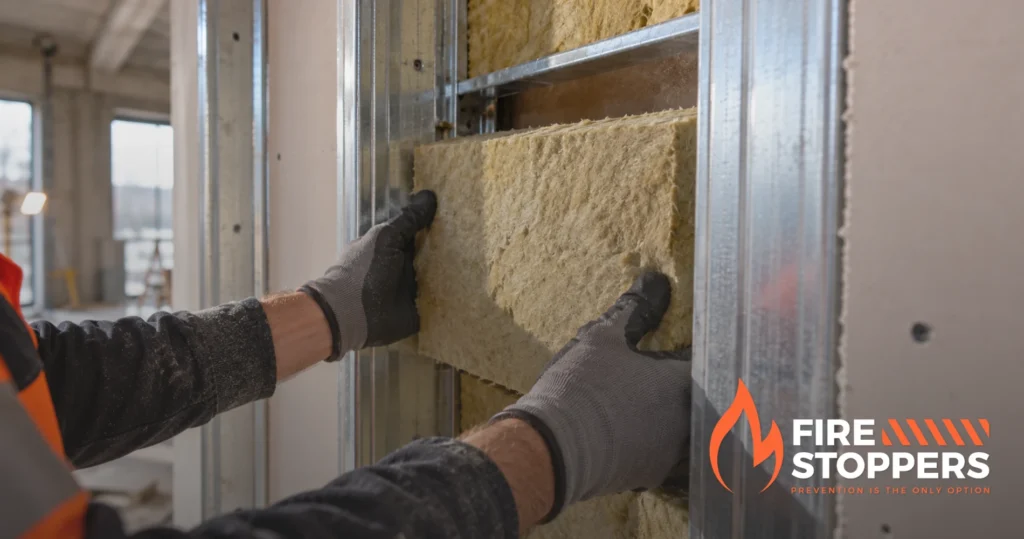
Good acoustics and good fire compartmentation want the same thing: control over the cavity behind the wall. Theatres, cinemas and concert halls rely on acoustic insulation, wall cavities and floating floors to isolate sound between spaces, and that same construction creates hidden voids that, without cavity barriers, let fire spread undetected behind walls and above ceilings.
The tension is real. Acoustic performance and fire compartmentation both want control over the same cavity, and a fix designed purely for sound can undo the fire protection, or the other way round.
Getting this right means specifying cavity barriers and acoustic treatment together, not sequentially, so neither compromises the other. This is one of the most commonly missed elements in venue fire safety audits, because the acoustic contractor and the fire safety contractor rarely talk to each other during a refit. For more on how these barriers work, see our guide to cavity barriers and passive fire protection in Ireland.
Movement Joints and Stage Vibration
Heavy bass, moving rigging and structural vibration are part of normal operation in a concert venue or theatre with an active stage.
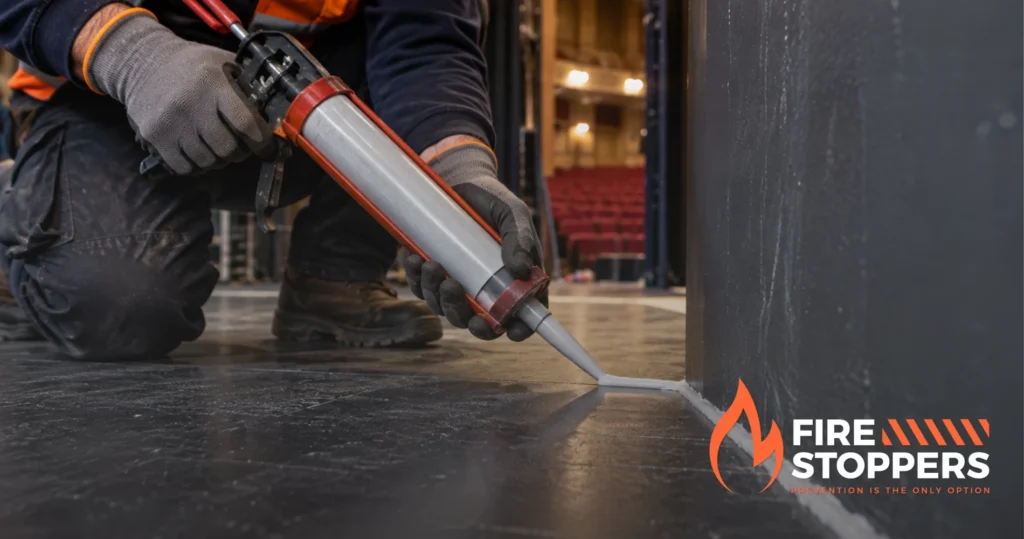
Standard rigid firestop mortars crack under that kind of repeated movement, which means the seal fails long before anyone notices.
Flexible, spray-applied elastomeric joint systems are built for this. They protect head-of-wall joints, expansion joints between drywall partitions and concrete floors, and roof deck connections, while accommodating the structural shifting that rigid systems can’t handle.
If your venue hosts live music, touring productions or anything involving rigging movement, this isn’t optional detail. It’s the difference between a seal that holds and one that’s already compromised by opening night.
Proscenium Fire Curtains in Traditional Theatres
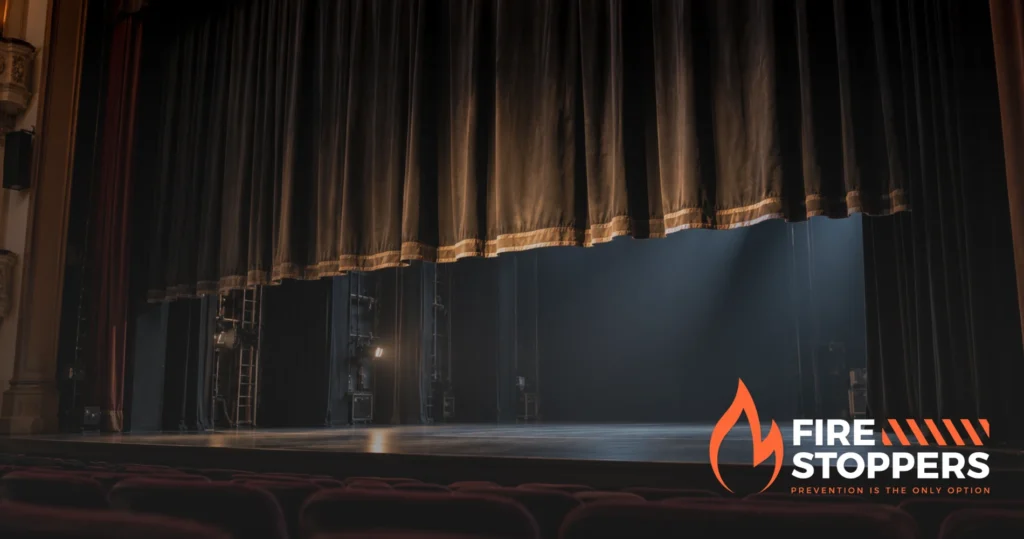
In a traditional proscenium theatre, a single fire-rated barrier separates the stage, containing scenery, lighting and often pyrotechnics, from the audience. That barrier is a heavy-duty fire curtain, designed to deploy automatically by gravity if a fire is detected on stage.
The curtain itself is only half the system. Its edges need smoke gaskets and specialised intumescent seals to form an airtight barrier, and the whole mechanism needs regular testing to confirm it will actually deploy when triggered, instead of sitting there looking like protection. A fire curtain that hasn’t been tested in years cannot be assumed to deploy correctly when it’s needed, whatever the maintenance log says.
Fire Risk Assessment for Entertainment Venues
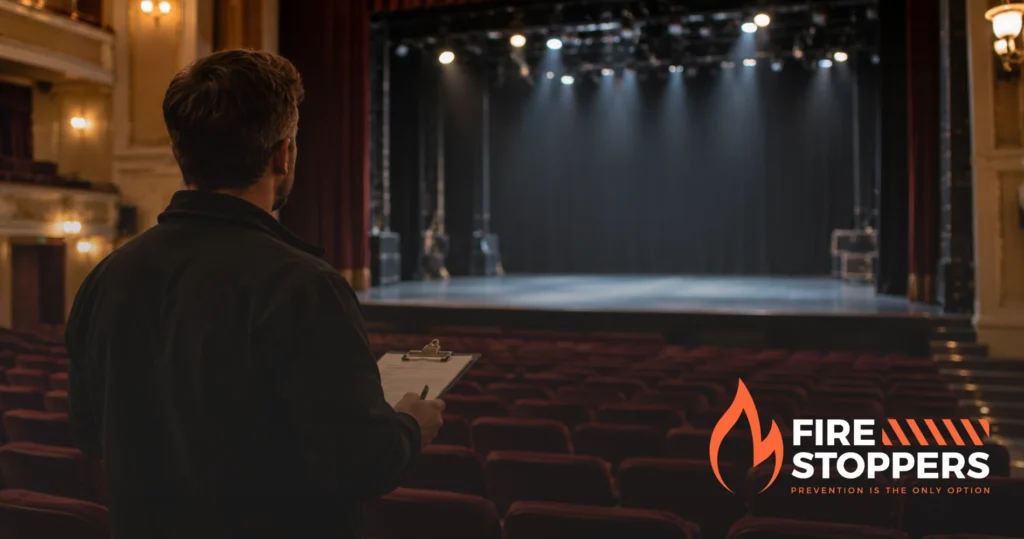
A fire risk assessment for a cinema, theatre or concert venue needs to account for how differently the same space behaves depending on what’s happening in it.
A weekday matinee with fifty people in the audience carries a different risk profile to a sold-out Saturday night gig with pyrotechnics and a packed standing area.
Assessing the building on a quiet day and calling it done misses exactly the conditions that matter most.
A proper assessment covers five things: identifying fire hazards specific to the venue’s use, identifying who’s at risk and when occupancy peaks, evaluating whether existing protection is enough for that risk, recording findings with a clear action plan, and reviewing the assessment whenever the venue’s use, layout or programming changes materially.
Fire Hazards Specific to Entertainment Venues
The fire hazards in a cinema or theatre look different to the fire hazards in an office. The ones that come up most often in venue audits, and why they keep getting missed:
| Hazard | Why It Gets Missed |
| High-powered stage and projection lighting | Sustained heat sits close to combustible scenery, drapes and set materials, and nobody treats lighting as a fire risk during a normal show run |
| Dense cable runs in control rooms and lighting grids | Rarely firestopped after the last equipment upgrade, since AV contractors aren’t the ones responsible for compartmentation |
| Pyrotechnics and special effects | Used without proper permitting or fire authority sign-off, often treated as a production decision rather than a compliance one |
| Combustible scenic materials, props and temporary staging | Adds fire load the original building design never accounted for |
| Projection room equipment | Runs unattended for long periods with limited routine inspection |
None of these are hidden or unusual. They’re the ordinary operating conditions of a working venue, which is exactly why they get missed: nobody treats normal as a risk until an assessment forces the question.
What Happens If a Venue Fails a Fire Safety Inspection?
Local fire authorities in Ireland can inspect any premises without prior notice and take immediate enforcement action where obligations aren’t being met. For an entertainment venue, that can mean a prohibition notice that closes the building, or part of it, until compliance is demonstrated.
For a venue running a schedule of screenings, performances or gigs, even a short closure is a direct hit to revenue and reputation that takes far longer to recover from than the closure itself. Insurers take the same view. If an incident occurs and an investigation finds passive fire protection wasn’t maintained to the standard it should have been, a claim can be reduced or refused entirely.
Getting this right isn’t a compliance exercise you complete once. It’s ongoing operational discipline that protects the building, the people inside it, and the business itself.
Fire Safety Audits for Entertainment Venues in Ireland
If you manage a cinema, theatre or concert venue, the fastest way to know where you actually stand is a passive fire protection audit, not another look at the alarm log. Firestoppers carries out audits, fire risk assessments and certified installation and remediation works across entertainment venues throughout Ireland, from cinemas and theatres to concert venues and multi-use event spaces.
We handle the full process, from initial audit through to certified sign-off. We operate nationwide, based in Dublin, with teams working across Cork, Limerick, Wexford, Kilkenny, Wicklow, Donegal and every other county.
Find out exactly where your venue stands: call 01 816 5587 or email info@firestoppers.ie, and get a clear answer on what needs attention, what it involves, and what it costs.
Disclaimer: The information in this article is for general guidance and educational purposes only. It does not constitute legal, technical or compliance advice. While Firestoppers makes every effort to ensure accuracy at the time of publication, laws, regulations and standards may change. Always seek professional advice from a qualified fire safety consultant or your local fire authority regarding your specific premises.