
Putty pads seal the gap left when an electrical socket or switch box is cut into a fire-rated plasterboard wall. Leave that gap unsealed and the wall’s fire rating stops meaning anything the moment it’s tested. Most people only find out after an inspection flags it, when it’s already a compliance problem instead of a five-minute fix.
What Is a Putty Pad?
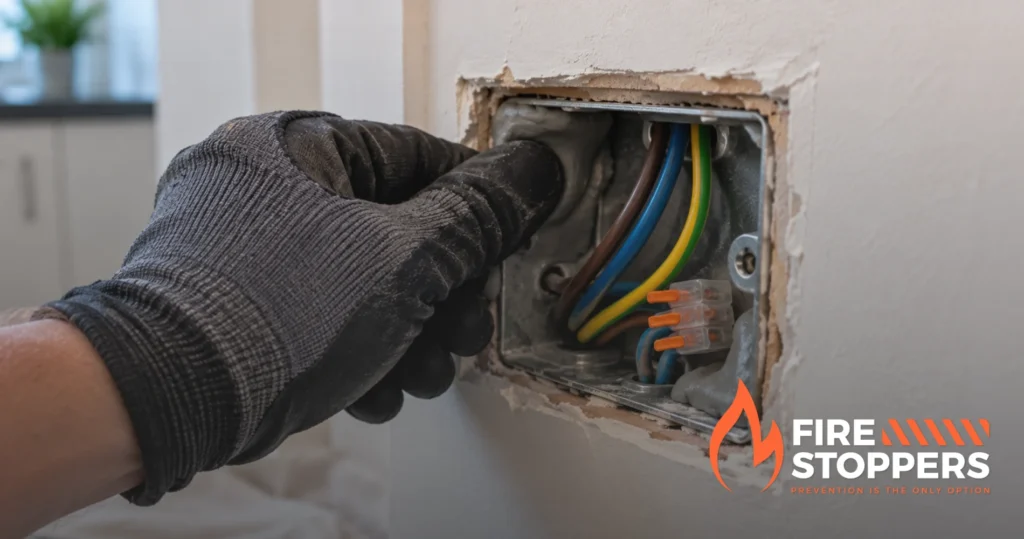
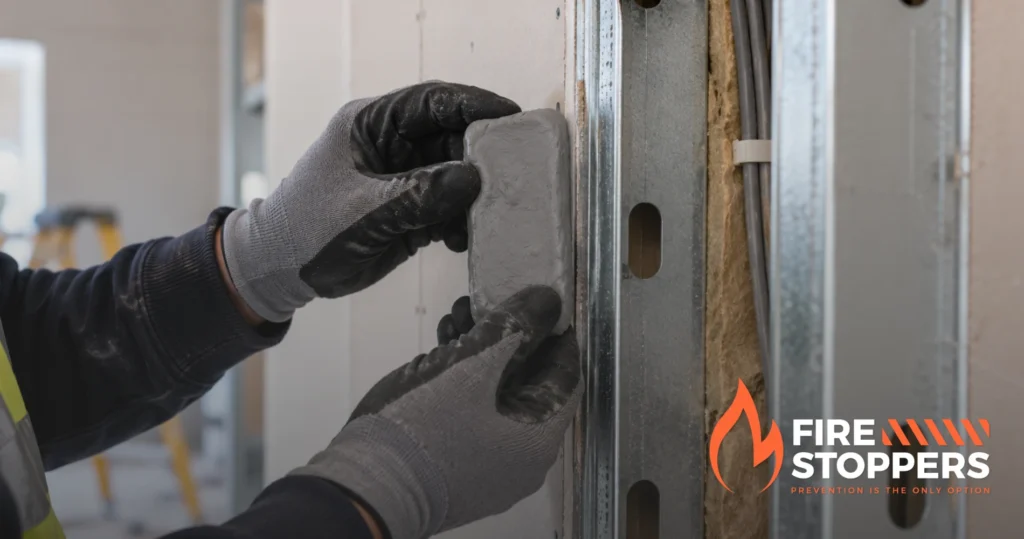
A putty pad is a soft, non-setting intumescent material that lines the inside of an electrical box before the faceplate goes back on, reacting to fire by expanding to seal the breach it would otherwise leave in the wall.
Putty is the operative word. It stays workable indefinitely. You can mould it by hand and reshape it around cables and knockouts, and it won’t crack or dry out the way a rigid filler would. That’s what makes it suitable for retrofits as well as new installs.
You’ll see putty pads sold under different manufacturer names, and the products vary in thickness, coverage and tested configuration. What matters for compliance isn’t the brand on the packet; it’s whether the specific product has been tested for the wall type and box you’re using it on.
How Putty Pads Work
Heat is what triggers it. Intumescent material stays chemically stable at room temperature, then swells under heat, often to several times its original thickness. Packed into a socket box, that expansion fills the space left behind as plastic components burn or deform, closing the penetration before flame or smoke can pass through.
Products used for this application are tested to EN 1366-3, the official Irish standard, published by NSAI, covering fire resistance of penetration seals. The fire resistance period achieved depends on the specific product, the wall construction and the box type, so it’s not a figure that can be quoted generically.
Always check the tested scope for the exact product being installed against the wall build-up on site.
Do Putty Pads Block Sound as Well as Fire?
Yes, but sound reduction is the secondary function, not the primary one. A putty pad’s main job is fire resistance, sealing the wall against flame and smoke. Filling that same gap also cuts air leakage, which reduces sound transfer between rooms, but that’s a side effect, not what the product is rated for.
Some products are sold specifically as acoustic putty pads, and you’ll sometimes hear the material called soundproofing putty or, less accurately, noise-cancelling putty.
It isn’t cancelling anything electronically, it’s simply closing an air gap that sound would otherwise travel through. If acoustic performance matters for the project, check that the specific product has been tested for it separately from its fire rating.

Where Putty Pads Are Required
Putty pads apply anywhere an electrical socket, switch or light fitting penetrates a fire-rated plasterboard partition, in single and double gang configurations, and around both metal and plastic boxes. That covers commercial fit-outs, apartment blocks, schools and residential builds alike, wherever the wall itself is required to hold a fire rating.
Worth noting: a fire-rated receptacle box is a different product entirely, an enclosure manufactured to hold its own fire rating rather than a retrofit seal. Putty pads are typically the practical option where a wall is already built and standard boxes are already installed. On steel and structural elements, the equivalent job is usually done with intumescent coatings rather than a putty pad.
How to Install Putty Pads for Sockets
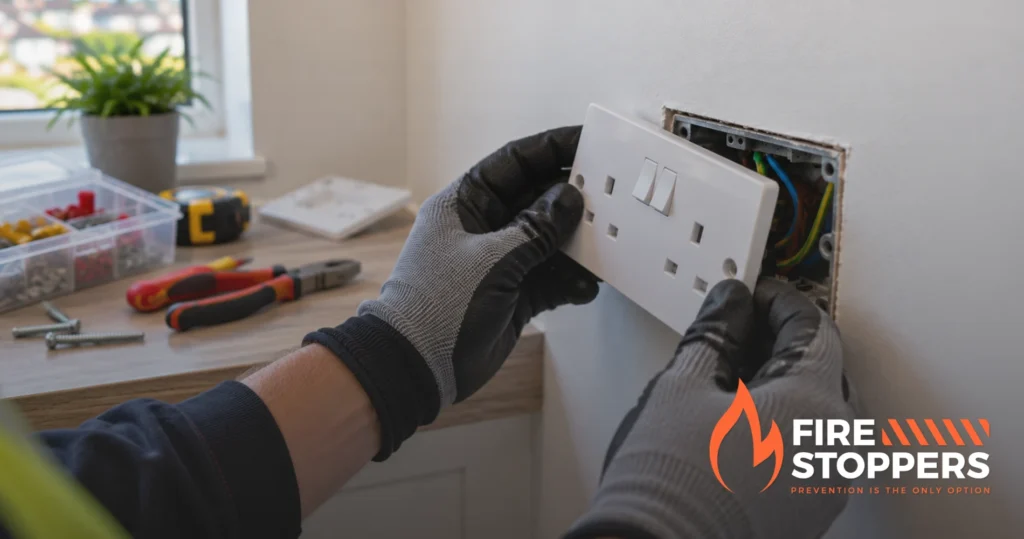
Installation doesn’t need specialist tools. It does need care. Rushed or partial application is the most common reason a correctly specified putty pad fails to perform as tested.
- 1. Isolate the power to the socket or switch before starting any work.
- 2. Remove the faceplate to expose the back box.
- 3. Clean the box of dust and debris so the putty makes full contact with the surface.
- 4. Mould the putty pad to fully line the back and sides of the box, covering cable entries and knockouts completely, right out to the front face of the wall.
- 5. Replace the faceplate, checking the putty hasn’t been displaced or thinned at the edges.
What Are Common Putty Pad Installation Mistakes?
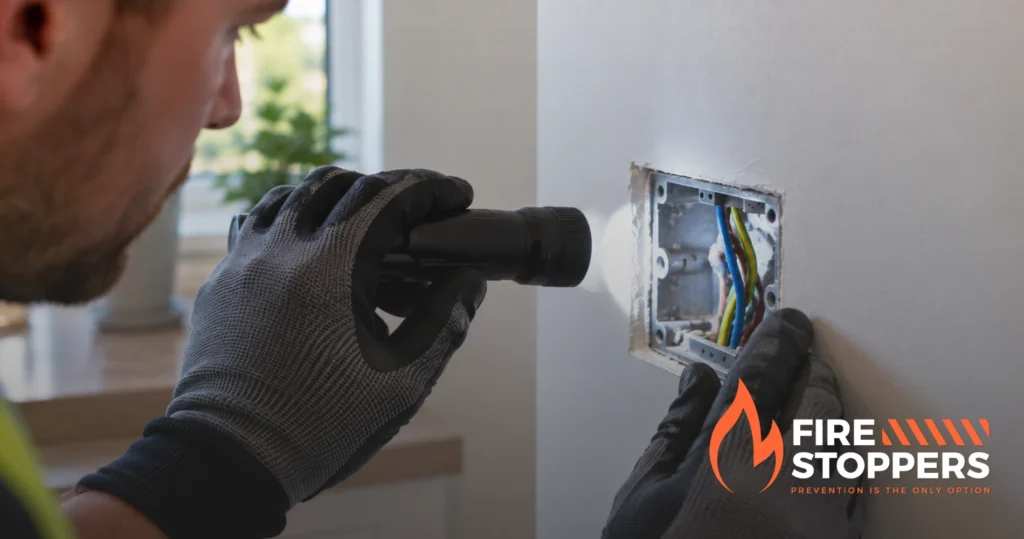
The most common mistake is underfilling the box. A thin or patchy layer of putty doesn’t give full coverage when it expands, and the resulting gap at the front face of the wall is the single most common failure point during testing and inspection.
Positioning matters too. Boxes installed too close together on opposite sides of a partition, or set with an oversized gap between the cutout and the box edge, put extra pressure on the seal to perform. Where spacing is tight, get the tolerance confirmed against the tested configuration for the specific product before installation, rather than assuming a standard gap is acceptable.
Using the wrong product for the box depth or wall build-up is the other common error. A putty pad tested for a single-skin partition won’t necessarily perform the same way on a double-skin wall, and swapping products between jobs without checking the tested scope is how buildings end up non-compliant despite looking finished, a gap that usually only surfaces at inspection or, worse, during an actual fire.

Why Choose Firestoppers for Putty Pad Installation in Ireland
Firestoppers installs putty pads as part of full passive fire protection works across Ireland, specified and fitted against the tested scope for the actual wall build-up, not a generic assumption of what should work. Browse our full range of putty pads or get in touch directly for a site assessment.
A site assessment gets you a straight answer on whether this was done correctly before it becomes a problem at inspection. Call 01 816 5587 or get in touch through the contact form to arrange one.