Most businesses that fail a fire safety inspection in Ireland were not being reckless. They simply did not know what the current condition of their building actually was. That gap between assumption and reality is where enforcement notices, Prohibition Notices, and voided insurance policies come from.
If you have failed an inspection or are trying to avoid one, here is the short answer: a fire officer can issue a formal enforcement notice requiring specific works within a legal deadline, restrict use of part of your building, or in serious cases issue a Prohibition Notice shutting it down entirely until deficiencies are resolved. What follows covers each stage in detail the legal framework, what inspectors look for, the full cost of non-compliance, and what a remediation path looks like in practice.
What Happens If You Fail a Fire Safety Inspection in Ireland?
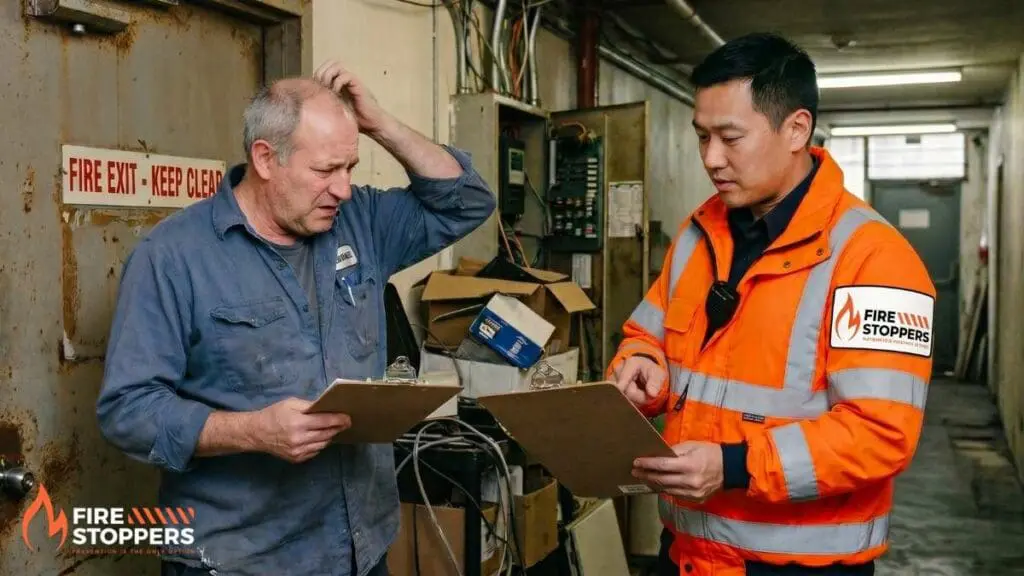
A fire officer who identifies deficiencies has a range of enforcement powers under the Fire Services Acts 1981 and 2003. What they use depends on the severity of what they find.
For minor deficiencies, you will typically receive an informal advisory identifying what needs to be rectified, with a reasonable timeframe to comply. This is the least serious outcome, but it starts the clock. Ignore it and the next step is formal.
For more serious deficiencies, a fire officer can issue a Fire Safety Notice. This is a legal document requiring specific works within a defined period. Non-compliance is a criminal offence.
Where there is considered to be a serious and immediate risk to occupants, a Prohibition Notice can be issued. This prevents use of the building, or a specified part of it, until deficiencies are resolved. No grace period. No negotiation.
One thing that surprises building owners the first time they go through this process: stated intentions do not satisfy a notice. A fire officer will require evidence of actual remediation photographs, maintenance and testing records, inspection documentation, and written confirmation from a qualified fire safety consultant that works have been completed to the required standard. Good intentions do not show up in a compliance file.
Your Legal Obligations Under Irish Fire Safety Law
As a building owner, occupier, or employer in Ireland, you are legally responsible under two separate pieces of legislation, and the obligations under each are distinct.
The Fire Services Acts 1981 and 2003 place a direct legal obligation on owners and occupiers to take reasonable fire safety precautions, to prevent the outbreak of fire, and to protect occupants in the event of one. Local authority fire services enforce this legislation and carry inspection powers under it.
The Safety, Health and Welfare at Work Act 2005 and its General Application Regulations extend the legal requirement to employers. Under the 2005 Act, employers must carry out fire risk assessments, implement appropriate fire safety measures, and ensure the workplace does not increase the risk to employees or members of the public. The Health and Safety Authority enforces this side of the framework.
Non-compliance with either piece of legislation carries real enforcement powers. These are not guidelines.
What Inspectors Are Actually Looking For
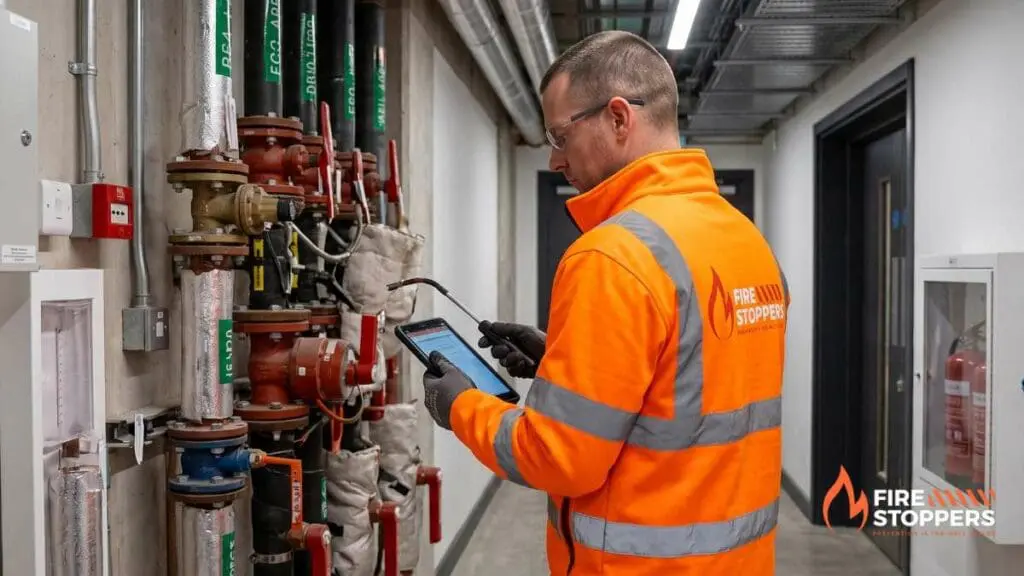
A fire safety inspection in Ireland covers significantly more than whether your fire alarm system is operational. Inspectors assess the building’s overall fire safety condition across both active and passive fire protection.
On the active side: fire detection and warning systems, manual fire alarm activation points, fire alarm notification appliances, emergency lighting, maintenance and testing records, and the adequacy of evacuation procedures throughout the building.
On the passive side: compartmentation integrity, fire doors and their hardware, fire stopping around service penetrations, intumescent seals, fire dampers in HVAC systems, the condition of fire-rated walls and floors, and whether escape routes and fire exits meet the required standard.
Passive fire protection is consistently where buildings fall short. In our experience carrying out fire safety audits across commercial and residential properties in Dublin and around Ireland, fire door deficiencies and compromised compartmentation are the two issues inspectors flag most consistently. A fire alarm going off is visible. A fire-rated partition that has been breached by a cable run or a fit-out contractor is invisible until it is not.
The Full Cost of Non-Compliance
The financial and legal exposure from ignoring fire safety deficiencies runs in several directions at once.
Insurance. Policies routinely contain compliance clauses. If your insurer discovers that known fire safety deficiencies were identified during an inspection and left unaddressed, your cover can be voided or a claim denied. You will have paid premiums for years, suffered a fire, and received nothing because of a deficiency a qualified contractor could have resolved in a day.
Fines and prosecution. Failing to comply with a Fire Safety Notice or obstructing a fire officer is a criminal offence under the Fire Services Acts. Convictions carry fines and, for serious breaches, imprisonment. The Health and Safety Authority has its own separate enforcement and prosecution powers under the 2005 Act. Landlords, building owners, and employers have all faced prosecution under both frameworks.
Civil liability. If a building occupant, employee, or visitor is injured in a fire in premises where deficiencies were known and documented, the legal exposure for the owner or occupier is substantial. An enforcement notice creates a clear paper trail of prior knowledge. That is an extremely difficult position to defend.
Business continuity. For occupiers, a Prohibition Notice is a trading shutdown. Every day the premises cannot operate is a direct cost. For multi-tenanted buildings, that pressure multiplies across every affected party.
Remediation is not free. But it is considerably less expensive than a Prohibition Notice, a denied insurance claim, or the civil liability that follows a fire in a building with documented deficiencies on record.
What Fire Safety Remediation Actually Involves
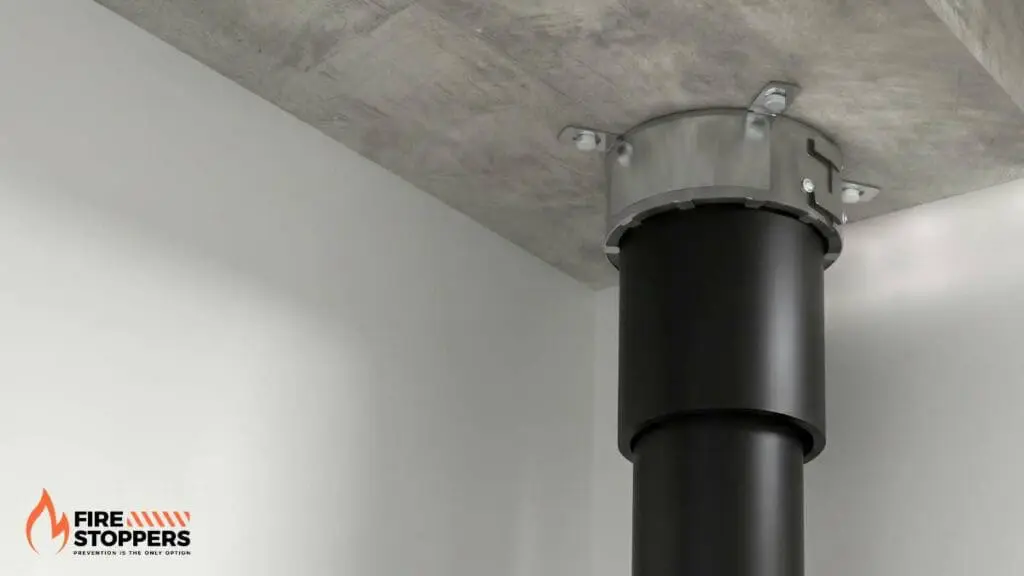
The scope of remediation depends entirely on what was identified. Some of the most common deficiencies follow a recognisable pattern.
Fire stopping to service penetrations is among the most frequently cited issues. Pipes, cables, and ducts that pass through fire-rated walls or floors breach the compartmentation of the building. Restoring the fire resistance of those elements requires intumescent products applied correctly around each penetration. The work is skilled and must be certified, but it is not structurally invasive.
Fire door deficiencies are also common. A fire door that does not close fully into its frame, that is missing intumescent strips or smoke seals, that has been wedged open as a matter of routine, or that carries unsuitable hardware is not functioning as a fire door. Depending on the condition, resolution may involve hardware replacement and upgrade, or full door replacement.
Compartmentation failures, where fire-rated walls or floors have been breached by building works, tenant fit-outs, or M&E installations carried out without regard for fire resistance, require careful survey, reinstatement, and documentation. The work needs to be certified by a competent person so that the building owner can produce evidence of compliance when required.
Experienced passive fire protection contractors work in occupied buildings as standard. Disruption is manageable and should not be the reason a building owner delays.
Apartment Buildings and the Interim Remediation Scheme
For apartment buildings where fire safety deficiencies relate to defective original construction, the Interim Remediation Scheme provides a pathway to publicly funded remediation of certain works. The scheme targets buildings with significant fire safety risks arising from original construction defects and carries specific eligibility criteria.
If your development has known fire safety deficiencies and the IRS may apply, getting qualified fire safety advice early is critical. The eligibility criteria are specific, the process requires detailed documentation, and the scheme continues to evolve. A contractor with direct IRS experience will tell you quickly whether it applies and what the process looks like in practice.
One Audit Changes the Entire Risk Profile of Your Building
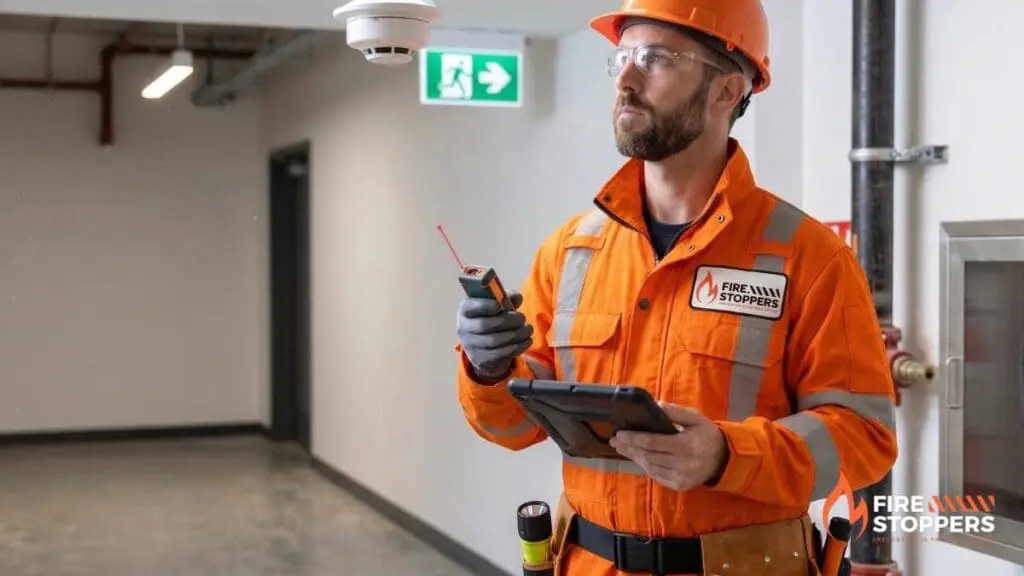
A proactive fire safety audit, carried out by a qualified fire safety consultant before an inspector arrives, changes everything. You find the deficiencies first. You control the timeline. You avoid the enforcement process, the insurance exposure, and the cost of bringing contractors in under time pressure with a deadline hanging over every day.
The buildings that fail fire safety inspections in Ireland are not usually poorly managed. They simply have not been audited recently enough to know what has changed. Tenants carry out fit-outs. Contractors route cables through fire-rated elements. Fire door hardware degrades. Compartmentation gets compromised by routine maintenance work that nobody thought to flag. The fire safety compliance position of a building signed off in 2008 looks different today.
The inspection that forces that conversation will cost significantly more than the audit that prevents it.
Frequently Asked Questions
What powers does a fire officer have following a fire safety inspection in Ireland? A fire officer can issue an informal advisory, a formal Fire Safety Notice requiring specific works within a defined legal deadline, or a Prohibition Notice preventing use of the building or part of it. Obstruction of a fire officer is a criminal offence.
How long do I have to comply with a Fire Safety Notice? The timeframe is set by the fire officer issuing the notice and varies based on the nature and severity of the deficiencies. There is no fixed statutory period. Deadlines are real and enforceable. If you cannot comply within the stated timeframe, engage a qualified contractor and communicate progress formally do not simply let the deadline pass without contact.
Can my business be shut down after a fire safety inspection? Yes. A Prohibition Notice can be issued where there is considered to be a serious and immediate risk to occupants. It prevents use of the building, or a specified section of it, until deficiencies are resolved. There is no grace period once a Prohibition Notice is in place.
What is the difference between a Fire Safety Notice and a Prohibition Notice? A Fire Safety Notice requires specific remediation works within a set period. A Prohibition Notice is an immediate restriction on the use of the building. Both are enforceable legal instruments. A Prohibition Notice is the more serious of the two and typically issued where the risk is considered immediate rather than ongoing.
Does failing a fire safety inspection affect my insurance? It can. Most commercial property policies contain compliance clauses. Documented deficiencies that remain unaddressed create a grounds for a claim to be denied or a policy voided. Notify your broker if you have received a Fire Safety Notice and seek written guidance on your position.
If you want to understand the current fire safety compliance position of your building before a fire officer does, Firestoppers can help. We carry out fire safety audits, fire risk assessments, and passive fire protection inspections across Ireland. Call us on 01 816 5587 or send an enquiry through our contact page.