Your architect just told you the steel beams in your new extension need intumescent paint. Or building control flagged your apartment block’s exposed columns during an inspection. Or you’re renovating a listed building and the fire safety consultant mentioned something about fire protection coatings.
And now you’re here, trying to figure out what intumescent fireproofing actually is, whether you really need it, and what it’s going to cost you.
Here’s what matters: if you have exposed steel or timber in your building that needs fire protection, intumescent fireproofing is probably your best option. It’s a coating that expands when it gets hot, creating an insulating layer that stops your steel beams from collapsing in a fire. The coating is nearly invisible once applied, which is why it’s used in everything from heritage buildings to modern offices across Ireland.
The alternative is wrapping your steel in fireboard or concrete, which is bulkier, more expensive, and often ruins the look of the space. That’s why intumescent coatings have become the standard approach for fire protection under Part B of the Irish Building Regulations.
Let me walk you through how it actually works and what you need to know.
How Intumescent Fireproofing Works in a Fire?
This is where it gets clever. When the coating heats up to around 200°C to 300°C (depending on the system) it starts to expand. Not just a little bit – we’re talking 20 to 50 times its original thickness for most water-based coatings. Some solvent-based systems expand even more.
As it expands, it forms this thick, foamy layer. Think of it like an expanding foam reaction, except this foam is designed to protect your structure by insulating the steel from heat.
That layer has really low thermal conductivity, which is a fancy way of saying it’s terrible at conducting heat. And in this case, terrible is exactly what you want because it acts as a barrier between the fire and your steel beam.
Here’s why this matters: unprotected steel starts losing its strength around 400°C. By 550°C, it’s lost about half its load-bearing capacity. In a serious fire, exposed steel can reach those temperatures in 10 to 15 minutes. That’s often before everyone has even evacuated the building, never mind before fire services have the blaze under control.
The coating buys you time. Instead of your structural steel failing in 15 minutes, properly applied paint can keep it strong for 30, 60, 90, or even 120 minutes depending on how thick it is. That’s the difference between a controlled evacuation and a catastrophic collapse.
For timber, it works slightly differently because wood doesn’t melt like steel does. The coating protects the timber from igniting and slows down how fast flames spread across the surface. This is particularly useful for exposed timber beams in renovated period properties or timber frames in modern extensions.
Where You’ll Actually See This Used in Irish Buildings
Honestly, once you know what to look for, you’ll start noticing these fire protection coatings everywhere.
Walk into any modern office building with exposed steel beams and there’s a good chance they’re protected with this paint. You might not realize it because the coating can be overcoated with regular paint in whatever colour matches the design. That’s one of the big advantages – you get fire protection without the industrial look of wrapped steelwork.
Apartment buildings use it extensively because the regulations around compartmentation are strict. Those steel columns in the car park? Coated. The steel frame around the lift shaft? Coated. Any exposed beams in the corridors or shared spaces? Almost certainly coated. This matters because Irish fire safety regulations require fire-rated separation between units, and you can’t have unprotected steel compromising those fire barriers.
Hotels and restaurants use it because they need passive fire protection but can’t afford to have everything wrapped in ugly fireproof boxes. The coating goes on, gets painted over to match the décor, and nobody except the fire safety inspector knows it’s there.
Data centres are interesting because they need both fire protection and corrosion resistance. That’s where epoxy-based systems come in – they protect the steel structure from fire while also preventing rust, which matters in environments with cooling systems and potential moisture.
For residential homes, you’re most likely to see it on exposed timber features or steel beams in extensions. If you’re doing a loft conversion with steel joists, or an open-plan extension with a steel frame, or exposing old timber beams during a renovation, there’s a good chance building control will require fire protection. The coating lets you keep the beams visible instead of boxing them in.
Historic buildings use it a lot because it’s one of the few fire protection methods that doesn’t alter the building’s appearance. You can protect a 200-year-old timber ceiling without covering it in modern materials. For listed buildings where planning restrictions are tight, that’s often the only option that gets approved.
Educational and healthcare facilities typically have stricter fire safety requirements because evacuation can take longer, and fire strategies tend to be more conservative. These coatings help meet those requirements without reducing usable space or blocking emergency access routes.
What Types of Coating Are Available?
There are three main types, and which one you need depends on where you’re using it and what you’re protecting.
Water-based coatings are the most common for interior work. They have lower VOC emissions, which means they’re safer to apply in occupied buildings and you don’t need as much ventilation during application. These typically provide fire resistance ratings from 30 to 120 minutes depending on how thick you apply them. They’re good for steel in offices, apartments, schools – anywhere indoors where the coating won’t be exposed to weather.
Solvent-based coatings are tougher and more weather-resistant. Use these for exterior applications or places like car parks where there’s moisture and the coating needs to withstand a bit of abuse. The trade-off is they have higher VOC content, so you need better ventilation during application and they’re not ideal for occupied spaces. But once they’re cured, they’re more durable than water-based systems.
Epoxy-based coatings – sometimes called hybrid systems – combine fire protection with corrosion resistance. These are increasingly popular in industrial settings, car parks, and anywhere the steel needs protection from both fire and rust. The epoxy base is tough and durable, and when it gets hot it expands just like other intumescent materials.
Each type has specific application requirements. Water-based systems need specific temperature and humidity conditions during application. Solvent-based systems need more ventilation. Epoxy systems take longer to cure. Getting this wrong means the coating might not perform as tested when you actually need it, which is obviously a problem.
Firestoppers specialises in passive fire protection and can assess which coating system suits your specific building and budget.
Why Application Thickness Matters More Than You’d Think
Here’s something that catches a lot of people out: the fire rating you get isn’t just about which product you use. It’s about how thick you apply it.
This is measured as dry film thickness, or DFT. That’s the thickness of the coating after it’s dried and cured on your steel beam. Not when it’s wet and freshly applied – after it’s completely dry.
Let’s say you need a 60-minute fire rating on a steel column. Depending on the size and shape of that column, you might need 1,000 microns of DFT. Want a 120-minute rating instead? You might need 2,000 microns or more. The exact thickness required depends on something called the section factor of the steel – basically the ratio of its surface area to its mass. Thin steel with lots of surface area heats up quickly and needs thicker coating. Heavy steel beams need less.
This is where DIY or inexperienced installers run into trouble. You can’t just slap on a coat of paint and call it done. Most applications need multiple thin coats rather than one thick coat because thick coats don’t cure properly and can crack or peel. Each coat needs to dry completely before the next one goes on. The surface needs to be clean, dry, and properly prepared or the coating won’t stick.
And here’s the critical bit: if you don’t hit the required DFT, you don’t get the fire rating. It’s that simple. Under-applied coating fails testing. Over-applied coating wastes money and can also cause problems with cracking.
Professional installers measure DFT during application with specialized gauges. They know how many coats are needed to hit the target thickness. They understand the environmental conditions required for proper curing. And most importantly, they can provide certification proving the work meets the specified fire rating.
That certification matters because building control will ask for it. Your insurance company will want to see it. And if there’s ever a fire, you’ll need proof that the fire protection was installed correctly.
What Fire Ratings Actually Mean for Your Building
Fire ratings are expressed in minutes: 30, 60, 90, or 120 minutes being the most common. That’s how long the coating can protect the steel before it reaches critical temperature and starts losing strength.
Your building’s required fire rating depends on several factors: how it’s used, how tall it is, how many people occupy it, and how long evacuation is expected to take. The regulations in Part B set out what’s needed for different building types.
For most residential buildings, you’re looking at 30 to 60 minute requirements for steel. Commercial buildings often need 60 to 90 minutes. High-rise buildings or buildings with complex evacuation requirements (hospitals, care homes, schools) might need 120 minutes or more.
Here’s a practical example: if you’re building a two-storey house extension with a steel frame, building control will probably require 30-minute protection on the steel. If you’re developing a four-storey apartment block, you’re looking at 60 to 90 minutes depending on the design and escape routes. If you’re renovating a listed building for commercial use, the requirements get more complex because you’re balancing heritage constraints with modern safety standards.
The coating protects your steel by maintaining its structural integrity during a fire. This gives occupants time to evacuate safely and gives fire services time to control the blaze before your building’s structure fails. That’s the whole point – preventing catastrophic collapse that kills firefighters or traps people inside.
How Penetration Seals Fit Into This
Right, this is important because it’s often missed during renovation work: passive fire protection isn’t just about coating your beams. It’s also about sealing every hole where services pass through fire-rated walls and floors.
Those holes for electrical cables? Need sealing. Pipes for plumbing or heating? Need sealing. Ventilation ducts? Need sealing. Every single penetration through a fire-rated wall creates a pathway for fire and smoke to spread between compartments. If you don’t seal them properly, your fire compartmentation doesn’t work.
That’s where penetration seals come in. They work on the same principle as the coating: when they get hot, they expand to close off the opening. The most common type is collars that wrap around plastic pipes. When the plastic pipe melts or burns away in a fire, the collar expands inward to fill the gap.
You also get pads or pillows for cable penetrations – these expand when heated to seal the opening where cables pass through. And the coating can be applied around service penetrations as part of a complete fire stopping system.
The problem is that contractors doing retrofit work often don’t understand this. They drill through fire-rated walls to run new cables or pipes, and then they fill the hole with regular foam or mastic. That’s not fire-rated. In a fire, it fails, smoke and flames spread through the hole, and your fire compartmentation is worthless.
Firestoppers provides fire stopping services including proper installation of penetration seals using approved products, all tested and certified to maintain the fire rating of your walls and floors.
The Real Costs and Trade-offs
Let’s talk money because this is usually what people actually want to know.
Intumescent paint is more expensive than regular paint. No getting around that. But it’s almost always cheaper than the alternatives, which are wrapping your steel in fireboard or encasing it in concrete. Those methods require more labor, add weight to your structure, take up space, and usually look terrible unless you’re planning to hide everything behind ceilings and walls anyway.
For a typical residential project – say a house extension with a few steel beams – you’re looking at a few hundred to a couple thousand euro depending on the fire rating required and the complexity of the steelwork. For a commercial building or apartment block, it scales up obviously, but the cost per square meter of protection is still usually lower than other methods.
The coating requires proper surface preparation (cleaning, removing rust, priming if needed), skilled application to achieve the correct thickness, and certification to prove compliance. That’s not a DIY job. Attempting it yourself will probably result in coating that doesn’t meet the fire rating, which means building control rejects it and you pay to have it done properly anyway.
The coating also needs reapplication eventually. Interior applications can last 20 to 40 years if properly maintained. Exterior applications might need recoating every 10 to 15 years depending on weather exposure. Regular inspections help catch damage before it becomes a problem.
One advantage that’s worth mentioning: the coating is flexible. If you later need to modify the steelwork or add new beams, you can apply coating to the new sections without redoing the entire structure. Try doing that with concrete encasement.
Who Should Actually Apply This?
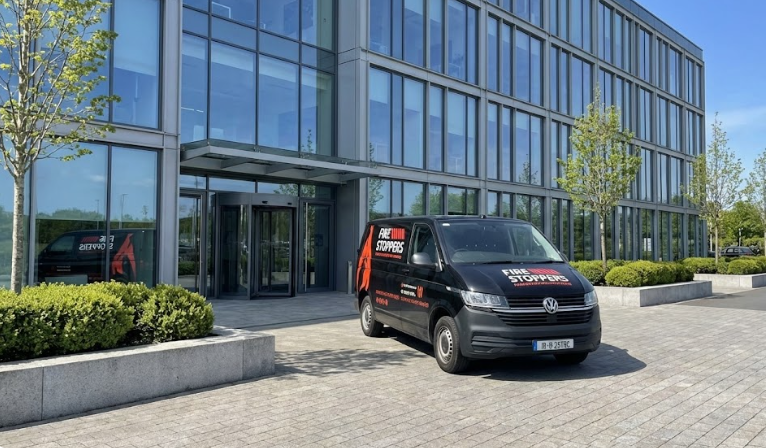
This is non-negotiable: use trained and certified professionals. Here’s why.
The coating only works if it’s applied correctly. The surface needs proper preparation – clean, dry, free from rust and contamination. The coating needs to be applied at the correct thickness, in the right number of coats, under the right environmental conditions. Temperature and humidity during application affect how the coating cures. Get any of this wrong and you don’t achieve the tested fire rating.
Professional installers understand these requirements because they’re trained on specific coating systems. They have the equipment to measure DFT accurately during application. They know how to prepare different types of steel. They can apply coating uniformly across complex steelwork. And critically, they provide certification proving the installation meets the specified fire rating.
That certification is what building control wants to see. It’s what your insurance company will ask for. It’s what protects you legally if there’s ever a fire and questions get asked about whether fire protection was installed correctly.
In Ireland, using trained installers and keeping proper certification helps demonstrate compliance for Building Control sign off and insurance requirements.
Firestoppers offers installation for residential, commercial, and public sector projects across Ireland. We’ve been doing this for over 20 years, so we’ve seen every type of project and know how to navigate the regulations and certification requirements.
Should You Use This for Your Project?
If you have exposed steel or timber that needs fire protection, yes. Here’s why.
You’re either renovating an older property or building an extension, and you want to keep structural elements visible rather than boxing them in. Fire protection paint gives you coverage without changing the appearance of your building. That matters for heritage properties where you can’t cover original features, and it matters for modern designs where exposed structure is part of the aesthetic.
You’re developing apartments or commercial property and need to meet compartmentation requirements while keeping construction costs reasonable. Boxing in every steel column and beam adds significant cost in materials and labor. Fire protection coating is faster, cheaper, and doesn’t reduce usable floor space.
You’re managing a facility like a school or hospital where fire safety requirements are strict but you need to maintain access and functionality. Bulky fire protection can block corridors, reduce door widths, or interfere with equipment. Intumescent coating protects the structure without creating obstacles.
Fire safety guidance and enforcement has tightened in recent years, particularly for multi unit residential and higher risk buildings. In practice, more projects now require clearly specified and certified structural fire protection to steel.
Intumescent coating helps meet these requirements without major changes to your building design or construction budget.
The right coating for your project depends on your fire rating requirements, what you’re protecting, whether it’s interior or exterior, and your budget. Getting professional advice ensures you select the appropriate system and application method.
Frequently Asked Questions
How long does the coating last?
Interior applications typically last 20 to 40 years when properly maintained. Exterior applications need recoating every 10 to 15 years depending on weather exposure. Regular inspections help you catch any damage before it becomes a problem and ensure the coating remains effective.
Can you apply it over existing paint?
In most cases, it needs to go onto a clean, properly prepared and compatible substrate. Existing coatings often have to be removed, or at least tested and verified as a suitable primer system, because the intumescent coating relies on good adhesion to a sound base to work properly. Always follow the specific product manufacturer’s guidance on overcoating existing paint systems.
Is it environmentally friendly?
Water-based coatings have relatively low VOC emissions compared to traditional paints and are generally safe for occupied buildings. Some newer systems use more sustainable components. Check manufacturer specifications for environmental data, and make sure there’s adequate ventilation during application regardless of which type you’re using.
Does it work on wood as well as steel?
Yes, though you need different formulations for wood versus steel. On timber, the coating protects against ignition and slows flame spread by creating an insulating layer. This is particularly useful for exposed timber beams in period properties or timber frames in modern extensions.
What happens to it after a fire?
The char layer that forms during the fire remains in place – it’s done its job protecting the structure beneath. After a fire, that char needs removing and fresh coating applied before the building can be reoccupied. The steel or timber underneath also needs inspecting for any fire damage.
How is it tested?
In certified fire testing laboratories using standards like BS 476 or EN tests. Samples get exposed to a controlled fire while monitoring temperature rise in the steel. The coating has to prevent the steel from reaching critical temperatures for the duration of its claimed rating. That’s how manufacturers prove their products work.
Related reading:
Passive Fire Protection Solutions Fire Stopping Services Fire Safety Management Contact Firestoppers