You manage a commercial office in Dublin. You know you need fire protection – that’s the law. But honestly? Most building managers don’t really understand what passive fire protection does or why systems you can’t even see matter so much.
Here’s what you actually need to know about keeping your Dublin office compliant and safe.
What Is Passive Fire Protection?
Passive fire protection is the stuff built into your building that contains fire without anyone needing to turn it on or activate it.
It’s not fire alarms, sprinklers, or extinguishers. Those are active systems – someone has to trigger them or they activate automatically.
It is fire-resistant walls and floors, fire doors, sealed holes where pipes and cables pass through walls, coatings on steel beams, barriers in ceiling voids.
When fire breaks out, these systems just work. Fire doors close. Special materials expand to seal gaps. Walls contain the spread. No switches. No sensors. Just materials doing exactly what they’re designed to do.
The job? Buy time for people to get out and firefighters to get in. Keep the fire where it started. Protect escape routes. Stop the building from collapsing long enough for everyone to evacuate safely.
Why This Actually Matters for Your Dublin Office

You’re legally required to meet fire safety standards. Part B of the Building Regulations, supported by Technical Guidance Document B for buildings other than dwellings, sets out typical ways to achieve compliance. If your office doesn’t meet the fire safety requirements of the Building Regulations, you may be in breach of the law.
You carry legal responsibility. Under the Fire Services Act 1981, the owner or person in control of a commercial building has a legal duty of care for fire safety. Dublin Fire Brigade can inspect your building, require improvements, and take enforcement action where necessary.
Your insurance might be affected. Most commercial insurance policies expect you to comply with fire safety regulations and maintain your protections. If a fire occurs and serious non‑compliance is identified, your insurer may reduce, delay, or in some cases refuse cover. That kind of outcome can be business‑ending.
People’s lives depend on it. Dublin office buildings house hundreds or thousands of people every day. Proper fire protection is the difference between a contained incident and people getting hurt.
It protects your building. A fire contained to one office causes manageable damage. A fire that spreads through walls with no protection? That can gut an entire building.
The Key Systems in Your Building
Fire Compartmentation
Compartmentation divides your building into fire‑resistant boxes. That’s really what it is – fire‑resisting boxes within the building.
If fire starts in one compartment, walls and floors resist fire for a set time (usually 60-120 minutes). Everyone gets time to evacuate before fire spreads to other areas.
Compartment walls must run full height to the underside of the floor slab or roof structure above, not just to your suspended ceiling.
Where it goes wrong in Dublin offices: Tons of buildings have suspended ceilings. If your compartment walls stop at the ceiling and don’t continue up to the floor slab above, fire spreads through that void above the ceiling tiles. This is one of the most common compliance failures we see.
Fire Stopping and Penetration Seals

Every time a cable, pipe, or duct goes through a fire-rated wall or floor, it creates a hole. Leave those holes unsealed? Fire and smoke spread exactly where your compartmentation is supposed to stop them.
Fire-stopping materials seal these holes. When exposed to heat, special materials expand to fill gaps and maintain the barrier.
Common penetration points include electrical cables and cable trays, water pipes and drains, HVAC ducts, data and phone cables, gas pipes. Each one is a potential pathway for fire if not sealed properly.
Where it fails: Renovations. New equipment. Additional cabling. Someone drills a hole for new cables, doesn’t seal it right. Over the years, buildings collect dozens of unsealed holes. Regular surveys catch these before they become problems.
Fire Doors
Fire doors resist fire for specific periods (typically 30, 60, or 90 minutes). But they only work if you maintain them.
What makes them work: They need intumescent strips that expand in heat to seal gaps, self-closing mechanisms that actually function, proper latching that keeps them closed, and intact seals around the frame. Most importantly, nobody wedging them open.
Where they fail: Someone wedges a fire door open because it’s convenient. The closer breaks and nobody fixes it. The seals wear out. These look like minor maintenance issues. They’re actually life safety failures.
Fire doors in escape routes and between compartments must be maintained to their certified standard. As good practice, every fire door in your building should be inspected at least annually by a competent person, with additional checks where risk or usage justifies it.
Structural Fire Protection
Steel loses strength fast when it gets hot. At 550°C, structural steel loses about half its strength. In a serious fire, unprotected steel frames can collapse.
How to protect it: Intumescent coatings that expand in heat to insulate the steel, board systems that wrap steel in fire-resistant materials, or spray-applied fireproofing.
Where it matters: Structural steel frames, exposed beams, columns carrying loads. These need protection rated to match your building’s requirements.
Cavity Barriers
Modern office buildings are full of hidden spaces – between external cladding and the building structure, above ceilings, in wall systems.
These voids act like chimneys in a fire. They let fire spread vertically and horizontally, fast.
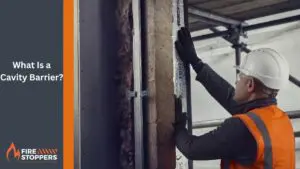
Cavity barriers create fire-resistant divisions within these hidden spaces, compartmentalizing them just like walls compartmentalize rooms.
Where you need them: External cladding systems, ceiling voids, raised floor voids, service risers.
Dublin Building Regulations You Need to Follow

Part B (Fire Safety) – Technical Guidance Document B
This is the main design reference for fire safety in Irish buildings other than dwelling houses.
It sets out typical limits for compartment sizes, fire‑resistance periods for walls and floors, suitable material classifications (including Euroclass ratings), escape route provisions, and access for the fire service.
For many Dublin office buildings, compartment walls and floors are designed to provide around 60 minutes’ fire resistance, with escape routes typically designed for 30–60 minutes. The exact requirements depend on building height, size, use and overall fire strategy.
In practice, finishes in reception areas, offices and escape corridors are selected to meet specific Euroclass performance levels for their location, with more stringent requirements usually applying in escape routes. The precise classes should always be confirmed against the current version of Technical Guidance Document B and your fire engineer’s design.
Fire Safety Certificates
You need a fire safety certificate if you’re building a new office, carrying out certain material alterations or extensions, or changing how a building is used.
Dublin Fire Brigade processes a large volume of fire safety certificate applications every year for projects in the city. When a certificate is granted, it confirms that the submitted design, if built as shown, is intended to meet the applicable fire safety requirements.
Important: Getting certificate approval doesn’t mean you’re done. You still need to maintain systems and run regular inspections.
What You’re Required to Do Ongoing
Getting the building right initially isn’t enough. Fire protection systems degrade.
Your legal obligations include maintaining fire safety measures, keeping them in efficient working order, and managing fire risk on an ongoing basis. In practice, that means maintaining passive fire protection, carrying out and reviewing fire risk assessments, keeping fire safety records, ensuring alterations do not reduce safety, and training staff.
Dublin Fire Brigade can inspect your building, issue enforcement or improvement notices if they find problems, and prosecute serious breaches.
Problems We See All the Time in Dublin Offices
Unsealed Holes from Renovations
Office spaces get reconfigured constantly. New meeting rooms. More desks. Equipment moves. Each change potentially involves new cables, different HVAC, and relocated lights.
Contractors drill through fire-rated walls. Sometimes they seal them properly. Often they don’t. Over the years, buildings collect dozens of unsealed holes.
The fix: Run penetration surveys regularly. Seal every hole properly with certified materials. Include fire-stopping requirements in all renovation contracts.
Broken Fire Doors
Fire doors get abused daily. Cleaners wedge them open. Staff prop them for easier access. Closers break. Seals wear out.
A fire door that doesn’t close and latch does nothing.
The fix: Annual fire door inspections by qualified people. Immediate repairs for broken closers, damaged seals, and failing latches. Clear signs saying don’t prop doors open. Regular reminders to staff about why fire doors matter.
Compartment Walls That Stop at the Ceiling
Many Dublin offices have suspended ceilings hiding a void between the ceiling tiles and the floor slab above. If compartment walls stop at the ceiling tiles, fire spreads through that void unchecked.
The fix: Extend compartment walls to the underside of the floor slab above. Install cavity barriers in ceiling voids where continuous walls aren’t possible. Survey ceiling voids to identify gaps.
Missing or Damaged Cavity Barriers
Cavity barriers wear out or get damaged during maintenance. Someone needs access above the ceiling, removes a barrier to get equipment through, and doesn’t put it back properly.
The fix: Inspect cavity barriers during regular surveys. Replace damaged barriers. Mark where barriers are so that maintenance work doesn’t compromise them.
Wrong Materials in Escape Routes
Regulations specify exactly what materials you can use in escape routes. Escape corridors need A2-s1,d0 materials. But renovations sometimes introduce lower-rated materials.
The fix: Check material specifications before any escape route changes. Make sure ceiling tiles, wall finishes, and floor coverings meet required classifications.
Your Inspection and Maintenance Schedule

Annual fire door surveys: Inspect every fire door. Check closers, seals, latches, glazing, and frames. Document what you find. Schedule repairs.
Penetration surveys: Examine fire‑rated walls and floors above ceilings and in risers on a regular schedule. Many office buildings work on a roughly two‑year cycle, but higher‑risk or heavily altered buildings may need more frequent checks.
Ongoing vigilance: Building managers should watch for changes that might affect fire protection, damage to fire doors or walls, changes in ceiling voids, and new equipment installations.
After major works: Any big renovation should trigger a full fire protection survey to make sure compliance wasn’t compromised.
Record keeping: Keep detailed records of all inspections, repairs, and changes. Dublin Fire Brigade might request these during inspections.
What It Actually Costs
Costs vary based on building size, age, and current compliance.
Surveys: €1,500-€5,000 for a full fire protection survey of a typical Dublin office (1,000-3,000 sq m).
Penetration sealing: €50-€200 per hole, depending on size and complexity. A building might have 200-500 holes needing work.
Fire door upgrades: €500-€1,500 per door for full refurbishment (new seals, closer, adjustment). New fire doors €800-€2,000+ installed.
Compartmentation works: Varies widely. Extending a single compartment wall through a ceiling void might cost €2,000-€5,000. Major compartmentation improvements can run €50,000-€150,000+.
Annual maintenance: Budget €3,000-€10,000 annually for inspections and minor repairs in a typical Dublin office building.
Cost vs. risk: A fire with fatalities in a non‑compliant building means potential criminal prosecution, a serious risk that insurance cover will be reduced, challenged, or refused, and very real prospects of business destruction.
Questions People Actually Ask
What is passive fire protection, and how does it work?
Passive fire protection is fire-resistant building materials and systems that contain fire without needing activation. This includes fire doors, compartment walls, sealed holes, and coatings on steel. These systems work automatically when exposed to fire, buying time for evacuation and emergency response.
How much does passive fire protection cost for a Dublin office?
Costs vary significantly based on building size and compliance level. Expect €1,500-€5,000 for full surveys, €50-€200 per sealed hole, €500-€1,500 per fire door upgrade, and €3,000-€10,000 annually for ongoing maintenance. Major compartmentation works can range from €2,000-€150,000+, depending on what’s needed.
How often do fire doors need inspection in Dublin commercial buildings?
Fire doors should get inspected annually by qualified professionals. During inspections, check closers, seals, latches, glazing, and frames. Between formal inspections, building managers should watch for propped-open doors, broken closers, or damaged seals. Fix any issues immediately.
What are the legal requirements for passive fire protection in Dublin offices?
Dublin commercial offices must comply with Part B of the Building Regulations. Technical Guidance Document B for buildings other than dwellings sets out typical design solutions that demonstrate compliance. Under the Fire Services Act 1981, building owners and those in control of premises have legal responsibility for fire safety. Dublin Fire Brigade can inspect buildings and enforce compliance, including issuing notices and prosecuting serious breaches.
What is fire compartmentation and why does it matter?
Fire compartmentation divides buildings into fire-resistant sections using walls and floors that resist fire for set periods (typically 60-120 minutes). Proper compartmentation contains fire to where it started, protects escape routes, and gives people time to evacuate safely. It’s required by building regulations and critical for life safety.
How do I know if my building’s passive fire protection is compliant?
Get a full fire safety survey by a qualified contractor. The survey should examine compartment walls, fire doors, sealed holes, cavity barriers, and structural protection. Qualified professionals will identify gaps and provide detailed reports on compliance status and what needs fixing.
What happens if passive fire protection systems fail during a fire?
Failed fire protection allows rapid fire spread, compromises escape routes, and risks structural collapse. This dramatically increases the danger to people and property. Beyond immediate life safety risks, non-compliant buildings face voided insurance, legal liability, potential criminal prosecution, and business destruction.
Can I do passive fire protection maintenance myself?
Basic monitoring can be done internally (looking for propped doors, visible damage), but inspections, testing, and repairs must be done by qualified professionals. Proper fire protection requires specialised knowledge of materials, installation techniques, and regulations.
The Bottom Line
Fire protection in Dublin commercial offices isn’t a complicated concept. Divide the building into compartments. Seal holes. Maintain fire doors. Protect steel. Inspect regularly.
But the details matter enormously. A single unsealed cable hole can wreck an entire compartmentation strategy. One propped-open fire door creates a life safety hazard.
Most building managers don’t have fire protection expertise. That’s fine. But you do need to work with qualified contractors who understand Dublin regulations, run proper surveys, and maintain systems correctly.
Your legal duty of care requires it. Your insurance requires it. Your building occupants’ safety depends on it.
Get a full survey done if you haven’t had one recently. Fix any compliance issues quickly. Set up regular inspection and maintenance schedules. Train staff on why fire doors matter.
Fire protection works silently in the background until the day it’s desperately needed. Make sure yours actually works.
Get Help with Fire Protection in Dublin
Need fire protection services for your Dublin commercial office? Firestoppers has been providing fire-stopping, penetration sealing, and passive fire protection across Dublin and Ireland since 1988.
We run full fire protection surveys, identify compliance issues, and deliver certified installations that meet Part B requirements and Dublin Fire Brigade standards.
Based in Santry, Dublin, we understand Dublin commercial buildings and their specific challenges. Our team provides detailed documentation, ongoing maintenance, and guidance on compliance.
Contact Firestoppers
Phone: 01 8165587
Email: info@firestoppers.ie
Address: Unit 6, Santry Industrial Estate, Santry, Dublin 9