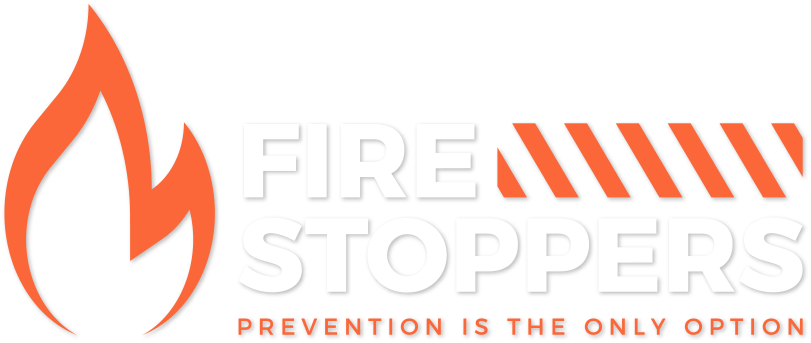
A kitchen fire suppression system is a fixed, automatic installation over your cooking line. It detects a fire at the hood, discharges a wet chemical agent onto the appliances and shuts off the gas and power feeding them, without waiting for a person to react. It only protects what its nozzles can reach, though. A fire that gets past the hood, through a duct or a gap in a wall, depends on something most kitchens never plan for.
Most guides stop at the nozzles. This one follows the fire further.
What Is a Kitchen Fire Suppression System?
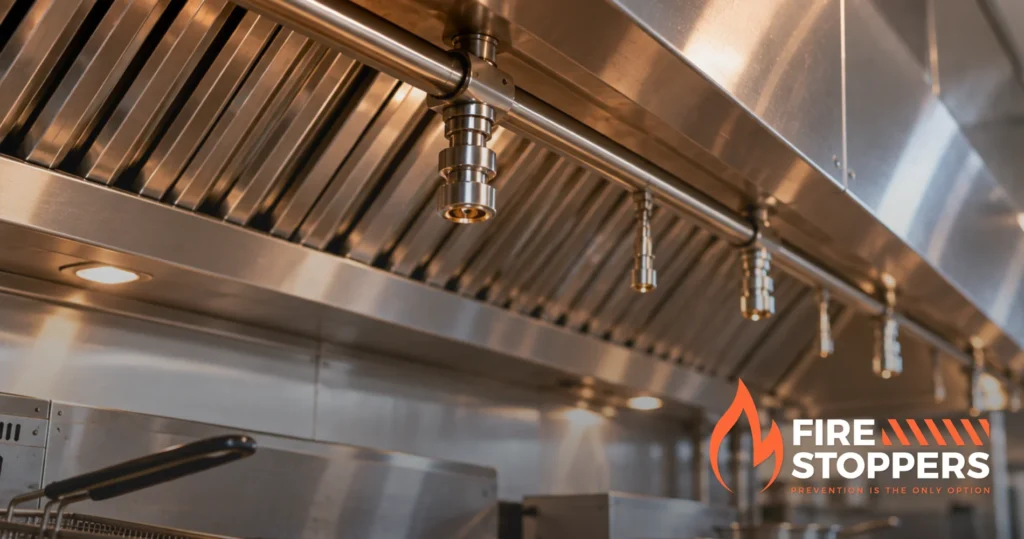
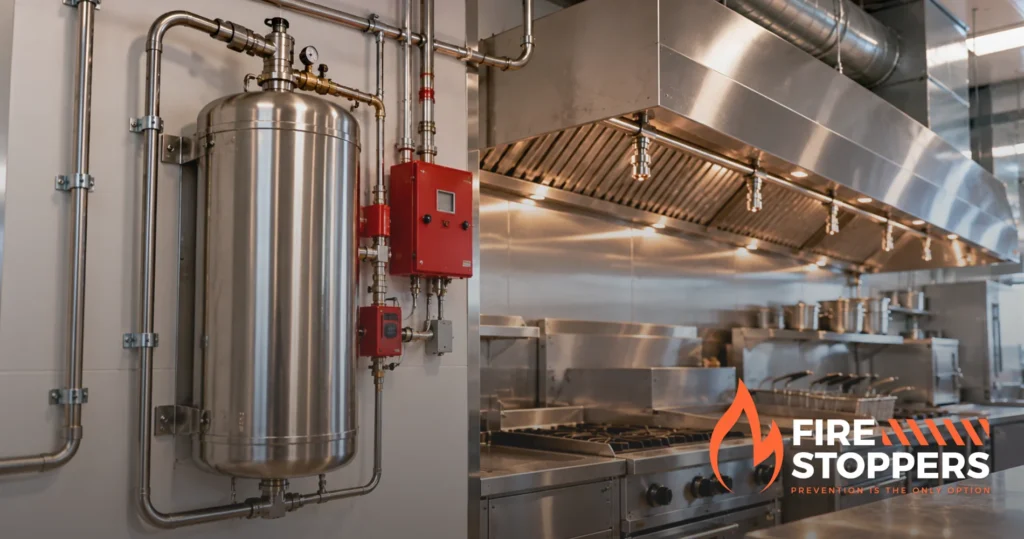
It is a tank of extinguishing agent connected through pipework to nozzles aimed at each hazard: fryers, hobs, griddles, grills and the hood itself. Because the nozzles sit under the extraction hood, you will also hear it called a kitchen hood fire suppression system or a hood suppression system.
Detection watches for high temperatures at the hood. Many systems use fusible links, small heat-sensitive links that part at a set temperature. Others use a pneumatic tube that reacts to heat along its length, or electronic detection. Whichever your kitchen has, it is the trigger for everything else, so a service visit checks it.
Is Kitchen Fire Suppression the Same as a Fire Alarm?
No, and the difference is practical. A fire alarm system tells people to leave but does nothing to the flames. A sprinkler system sprays water across a whole area, which is the wrong tool for burning cooking oil. The suppression system is the only one of the three built to attack a grease fire directly, and it can link into your alarm system so staff are warned the moment it discharges.
If you want the wider picture, our guide to active and passive fire protection shows how the two fit together, and our explainer on fire suppression systems covers every type.
What Types of Kitchen Fire Suppression Systems Are There?
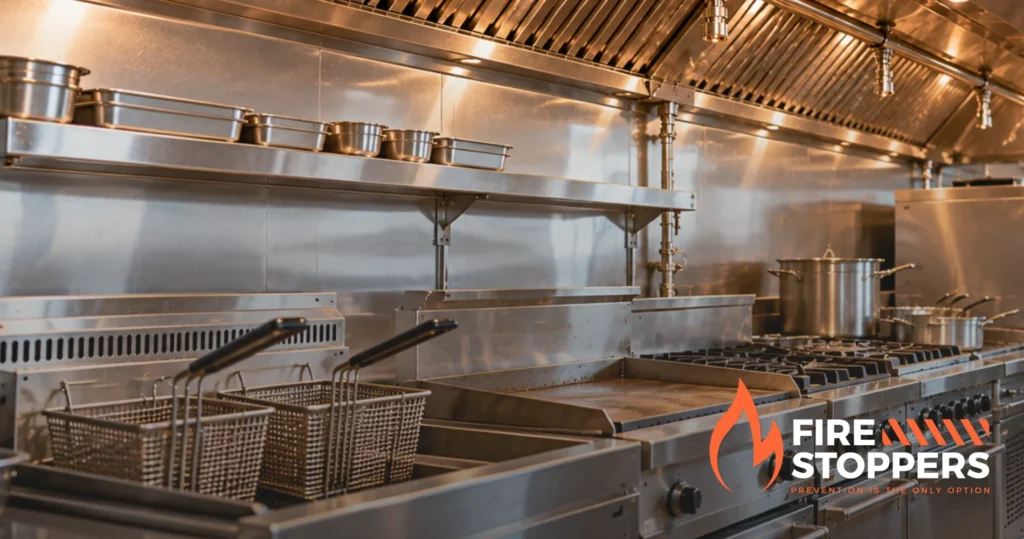
For commercial cooking the answer is wet chemical, and it is not close. The agent is a liquid that reacts with hot cooking oil to form a soapy layer on the surface. That layer cools the fuel, seals in vapours and stops re-ignition. It is built for Class F fires, the fire class for cooking oils and fats.
Ansul is one of the manufacturers behind these systems, and its R-102 is a widely installed example. Your installer designs the layout around how your cooking line is arranged.
Water mist works differently. It breaks water into very fine droplets, so far less water lands on your equipment and floor, which limits water damage. You will often find it in domestic and residential kitchens, where a mist suppression system suits a small cooking space.
Gas systems exist too, but they protect server rooms and electrical rooms. Our comparison of water, chemical and gas suppression goes into the trade-offs of each.
How Much Does a Kitchen Fire Suppression System Cost?
Your price depends on the layout of your cooking line, and no single figure would be right for most kitchens. Five things move it most.
Number of appliances. Every fryer, griddle and hob needs its own nozzle coverage, so a four-appliance line costs more than a single fryer.
Hood and duct size. Bigger canopy, longer duct run, more nozzles, more pipework.
Shut-offs and alarm links. Gas valves, electrical cut-outs and a connection to the fire alarm system each add parts and labour.
New fit-out or retrofit. Fitting a system around existing equipment and finished walls usually takes longer than building it in from the start, and the labour shows in the quote.
Servicing. The install is only the first bill. Six-monthly visits, and a recharge after any discharge, continue for as long as the system does.
The practical way to compare quotes is to give every installer the same brief: your appliance list, a hood measurement, and a request to price the shut-offs and the first service. Quotes that differ wildly are usually pricing different scopes. Be wary of any firm price given with no site visit.
Do You Need a Kitchen Fire Suppression System?
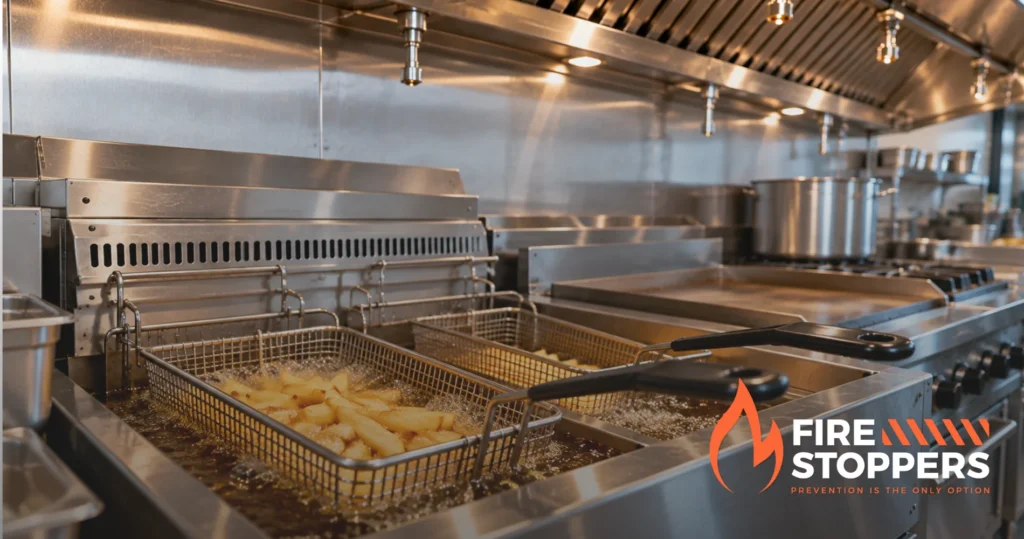
It depends on your kitchen, your insurer and your fire risk assessment. A deep fat fryer, griddle or wok running through service concentrates the risk of kitchen fires. Common causes include overheated fat, spills while topping up a hot fryer and grease building up in the hood, filters and ducting. A flare-up under a greasy filter can reach the duct before staff have crossed the kitchen.
The Confederation of Fire Protection Associations in Europe puts numbers on the risk. Its guideline on fire safety in restaurants notes that cooking oil is safe to cook at about 205°C, gives off flammable vapour at about 230°C and ignites on its own between 310°C and 360°C. It recommends a fixed system with manual and automatic operation, fitted by an approved third party, over cooking equipment, canopies and ducting. Ask your own insurer what they expect for your cooking equipment before you buy anything.
If you are unsure what your kitchen needs, a fire risk assessment is the quickest way to find out. It looks at your cooking equipment, your staff and your building together.
Can Anyone Install a Kitchen Fire Suppression System?
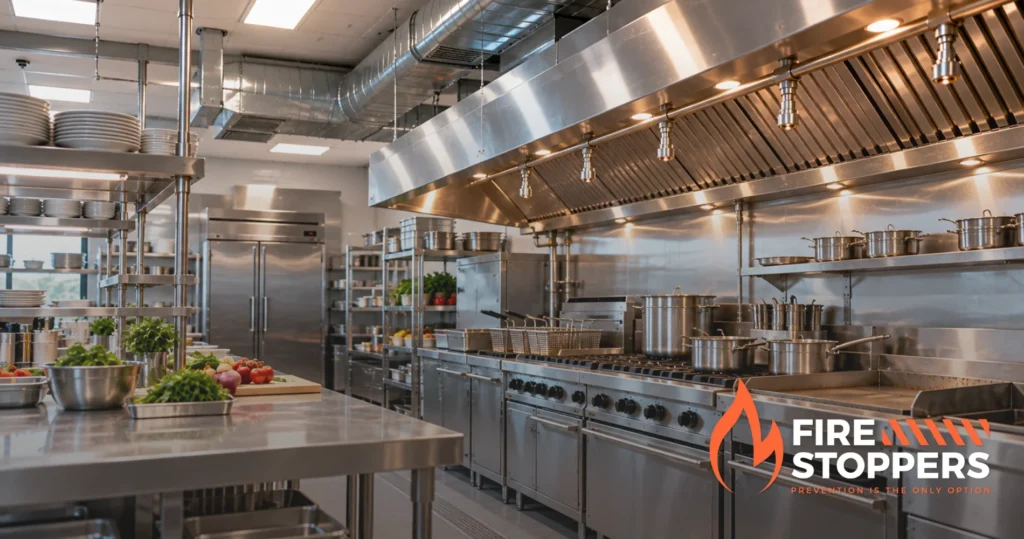
No. A pre-engineered system is only as good as its design, and the design is specific to your appliances. Nozzle position, pipe length and tank size are all set within the manufacturer’s limits, and a nozzle aimed wrongly can leave a fryer partly uncovered.
Manufacturers such as Ansul sell through authorised distributor networks, so the work should be done by an installer authorised for the brand they are fitting. Ask to see that authorisation before you sign.
One more trap. Moving a fryer or adding a griddle changes what the nozzles cover, so any change to your cooking line means a call to your installer first.
How Often Does a Kitchen Fire Suppression System Need Servicing?
Installers commonly service a system every six months, so ask yours for the schedule and put each visit in your calendar. A service checks the parts that stay invisible until the day you need them. The engineer confirms the nozzle caps are in place and free of grease, the pressure gauge reads correctly, the detection links are intact and the pull station, the manual release, is reachable. They test that the gas valve and electrical shut-offs actually operate, and they check the cylinders and agent against their dates.
Between visits, a monthly look from your kitchen staff catches the obvious problems: a cap knocked loose, a blocked pull station, a gauge out of range. After any discharge, call your installer before cooking resumes. The system has to be inspected and recharged first.
A service does not clean your extraction. Grease in the hood and duct is a separate job, and it is the fuel your system exists to deal with. There is also no single lifespan to quote. The useful question at each visit is which parts are due for replacement.
How Does Passive Fire Protection Help Protect Commercial Kitchens?
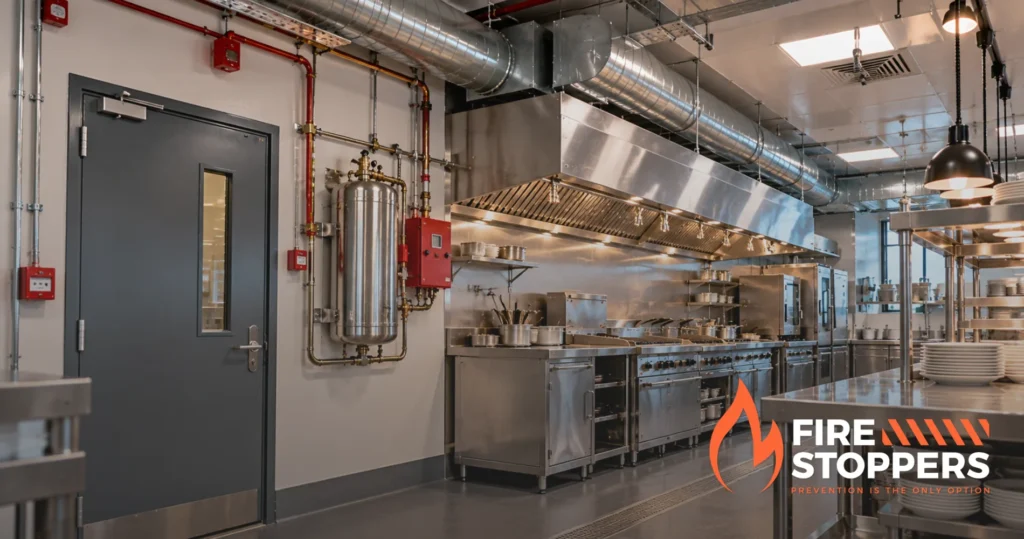
Passive fire protection helps limit how far fire and smoke can spread beyond the cooking line. Depending on the building, that can mean fire-resistant walls and ceilings, firestopped openings and fire doors, none of which needs power or a trigger. Where suppression deals with the fire at the appliance, passive protection works on the space around it.
Kitchens are full of holes. Pipes and cables cross compartment lines, and service hatches open into ceiling voids. Each one is a route for fire and smoke into the next room if it is not firestopped correctly.
A kitchen extract duct is one of those openings. Where it passes through a fire-rated wall or floor, the gap around it is a penetration, and firestopping is how it is treated, with a method that suits the duct, the construction and the rating. The European restaurant fire safety guideline describes enclosing a duct that cannot run straight outside in non-combustible construction with access points for cleaning. Fire-rated access hatches are one way to provide those points.
In a hotel, care home or student accommodation block, the next room often holds sleeping occupants. Fire compartmentation divides the building into sections designed to hold a fire where it started.
Staff are the last layer. A suppression system does not replace a fire extinguisher and a fire blanket by the exit, or a plan for when to leave rather than fight. A wet chemical extinguisher is the right one for a kitchen because it is built for Class F. Ask a new starter to point to both, and if they hesitate, that is your training gap.
If your premises serve food at scale, our fire safety in hospitality guide shows how kitchens fit into the wider building.
Get a Passive Fire Protection Quote in Ireland
Tell us about your kitchen and we will quote for the passive side. We survey your existing passive fire protection, firestop the penetrations and gaps around the cooking area, and repair and upgrade compartment walls and fire doors, with photographic records on completion. Firestoppers is Ireland’s leading passive fire protection specialist, and we work nationwide from our base in Dublin.
Prefer to talk it through? Ring 01 816 5587 or email info@firestoppers.ie. Or get my free passive fire protection quote and we will tell you what your kitchen needs.
A suppression system puts the fire out. Passive protection helps decide where it can go in the meantime.