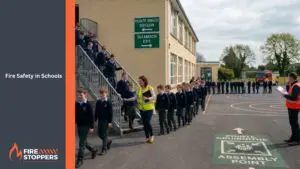
In March 2026, St Patrick’s National School in Celbridge, Co Kildare made the difficult decision to temporarily close its doors to around 400 pupils and staff. The reason was not a fire itself, but the discovery of unresolved fire safety and building compliance issues identified during external reviews. No incident had occurred, but the risks were serious enough to warrant immediate action.
This scenario is not unique to Ireland. Across the UK, school buildings of all ages carry hidden passive fire protection deficiencies that go undetected until an inspection, a refurbishment, or in the worst cases, a fire. The Celbridge situation is a timely reminder that fire safety in schools demands the same rigorous, proactive approach applied to commercial and industrial settings.
What Is Passive Fire Protection and Why Does It Matter in Schools?
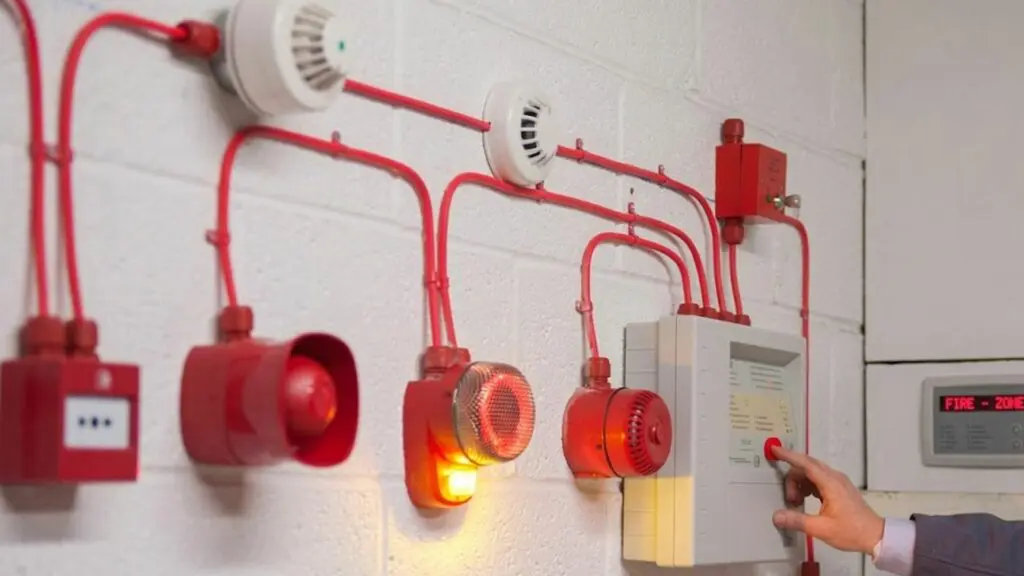
Passive fire protection (PFP) refers to the built-in fire resistance of a building’s fabric. Unlike active systems such as sprinklers or alarms, passive fire protection does not require activation. It works continuously, contained within walls, floors, ceilings, and service penetrations.
Its purpose is threefold: to contain the spread of fire and smoke, to protect structural integrity, and to provide safe evacuation time. In a school environment, where hundreds of children and staff are present, that evacuation time is critical.
For a detailed overview of how passive fire protection works and why it sits at the heart of building fire safety, Wikipedia’s passive fire protection article provides a thorough and accessible reference.
The Specific Challenges Schools Present
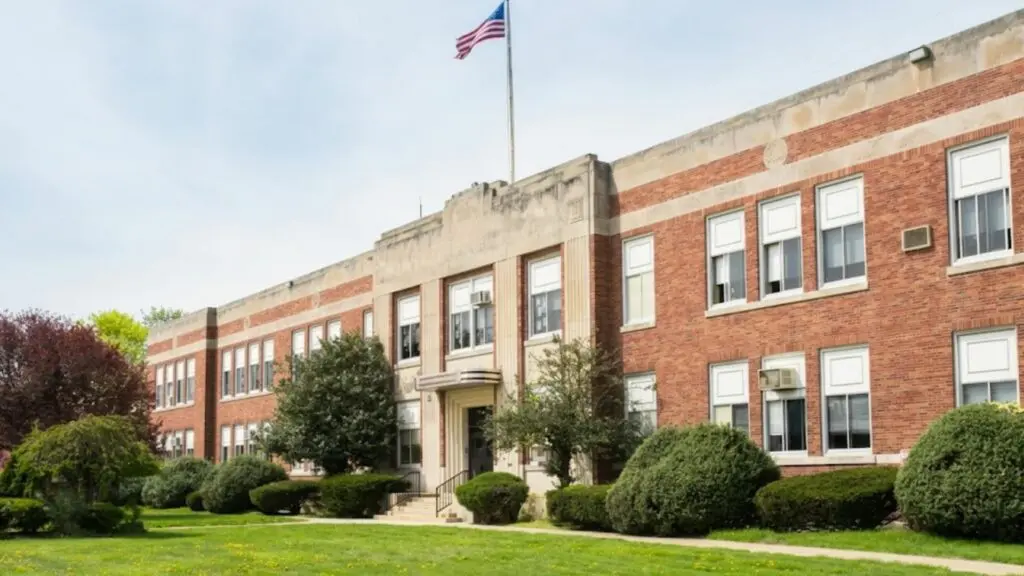
Schools are not straightforward buildings to protect. Many were constructed or extended across several decades, often piecemeal, with limited consideration for long-term compartmentation strategy. Subsequent refurbishments have frequently introduced new service routes through fire-resisting elements without appropriate firestopping being applied.
The result is a building where the intended compartmentation strategy bears little resemblance to the actual condition of the structure. The table below sets out the structural and operational factors that make schools particularly susceptible to passive fire protection failures.
| Challenge | Why It Increases PFP Risk |
|---|---|
| Ageing building stock | Older construction methods predate modern compartmentation standards; original materials may have degraded |
| Multiple phases of construction | Extensions and refurbishments often introduce new penetrations without systematic firestopping sign-off |
| High volume of service routes | Dense cabling and pipework for IT, heating, and ventilation creates numerous penetration points through fire-resisting elements |
| Ongoing minor maintenance works | Repeated small interventions by non-specialist trades accumulate over time and compromise fire-resisting walls and floors |
| Occupied buildings with limited downtime | Works are often completed quickly to minimise disruption, with firestopping quality checks deprioritised |
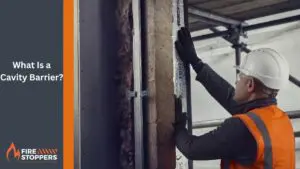
| Ceiling and roof voids | Large concealed voids are difficult to inspect and frequently lack cavity barriers or have damaged ones |
Each of these factors is common. In most school buildings that have not had a dedicated PFP survey, several of them will apply simultaneously.
Where Passive Fire Protection Fails in School Buildings
Deficiencies are found consistently in the same locations. The table below identifies the most common failure points discovered during school surveys and fire risk assessments.
| Location | Common Failure | Risk |
|---|---|---|
| Corridor and classroom walls | Unsealed cable and pipe penetrations | Fire and smoke spread between compartments |
| Suspended ceiling voids | Missing or damaged fire barriers | Rapid horizontal spread of fire above the visible ceiling line |
| Fire doors | Incorrect gap tolerances, damaged seals, or doors wedged open | Loss of compartmentation at critical egress points |
| Stairwell enclosures | Compromised wall integrity from repeated maintenance works | Smoke ingress into evacuation routes |
| Roof voids | Absent cavity barriers | Uncontrolled fire spread across large horizontal areas |
| Mechanical and electrical service risers | Unsealed duct and pipe penetrations at each floor level | Vertical fire spread through the building |
In many cases these deficiencies are the cumulative result of small maintenance interventions carried out over many years. Each individual penetration might appear insignificant in isolation. Collectively, however, they can render a compartmentation strategy entirely ineffective.
The Role of Firestopping in School Compliance
Firestopping is the specialist trade discipline focused on sealing penetrations and joints in fire-resisting elements to restore their designed fire resistance period. It is not a generic building or maintenance task. The selection of the correct firestopping system depends on a number of variables.
| Variable | Why It Matters |
|---|---|
| Substrate material (concrete, timber, masonry, plasterboard) | Different substrates require different intumescent or fire-rated products |
| Service type (rigid pipe, flexible cable, duct) | Intumescent pipe collars, cable management systems, and duct wraps are not interchangeable |
| Fire resistance period required (30, 60, 90, 120 minutes) | Products must be third-party tested and certified to the correct period, in line with Irish Standard IS 3218 and Technical Guidance Document B |
| Annular gap size | Exceeding a product’s tested gap range invalidates certification |
| Direction of testing (vertical wall vs horizontal floor) | Some systems are directionally tested and cannot be applied in the opposite orientation |
Using the wrong product, or a correct product installed outside its tested conditions, does not deliver the rated fire resistance. This is a critical point for schools procuring firestopping works: the competency and certification of the installer matters as much as the product itself.
Proactive vs Reactive: The Cost Argument
The Celbridge school closure illustrates a pattern seen repeatedly across the Irish built environment. Deferred fire safety works do not reduce risk. They accumulate it. When issues are eventually identified, the consequence is not a planned programme of works but an emergency response involving temporary closure, reputational damage, and significantly higher costs.
| Approach | Typical Outcome |
|---|---|
| Planned passive fire protection survey and remediation | Controlled programme, budgeted costs, minimal disruption to operations |
| Reactive response following inspection failure or incident | Emergency works, potential closure, higher contractor costs, increased scrutiny from the HSA and local Fire Authorities |
| No action | Continued non-compliance with Irish fire safety legislation, unquantified risk, and the potential for fire spread to go uncontained |
For ETBs (Education and Training Boards) and local authorities managing multiple school buildings across Ireland, a strategic approach to passive fire protection surveys and remediation delivers both cost efficiency and sustained compliance across the estate.
What a Passive Fire Protection Survey Covers
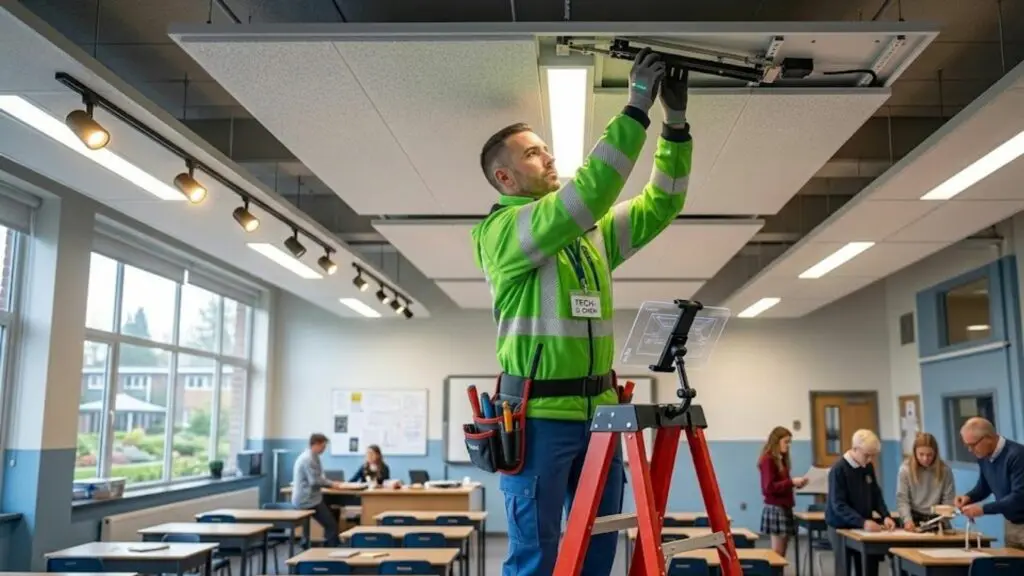
A thorough PFP survey of a school building will assess all fire-resisting elements and identify any breaches or deterioration. The output should be a prioritised remediation schedule aligned to risk.
| Survey Element | What Is Assessed |
|---|---|
| Compartmentation mapping | Confirmation of intended fire compartments against as-built conditions |
| Fire door inspection | Door leaf, frame, intumescent seals, cold smoke seals, ironmongery, and self-closing devices |
| Service penetration audit | All penetrations through fire-resisting walls, floors, and ceilings |
| Cavity barrier inspection | Presence and condition of barriers in roof voids, ceiling voids, and wall cavities |
| Existing firestopping condition | Integrity, correct specification, and third-party certification of installed products |
Surveys should be carried out by qualified passive fire protection specialists, ideally holding third-party accreditation such as FIRAS or IFC certification, and should be documented with photographic evidence to support ongoing compliance records under Irish fire safety legislation, including the Fire Services Acts 1981 and 2003.
Summary
The temporary closure of a school due to fire safety concerns is a preventable outcome. Passive fire protection deficiencies in school buildings are common, but they are identifiable and remediable through systematic survey and specialist firestopping works.
| Key Takeaway | Action Required |
|---|---|
| PFP failures are cumulative and often hidden | Commission a specialist passive fire protection survey |
| Ongoing compliance requires documented evidence | Maintain survey records and works sign-off documentation in line with Irish Fire Safety Certificates |
| Correct firestopping requires specialist competency | Engage FIRAS or IFC-certified contractors |
| Proactive remediation costs significantly less than reactive response | Budget for planned works within a structured compliance programme |
If your school estate has not had a passive fire protection survey, or if refurbishment works have been carried out without systematic firestopping sign-off, the risk profile of those buildings is unknown. That is a position no responsible person — including Designated Liaison Persons under Irish fire safety regulations — should be comfortable occupying.
Firestoppers provides specialist passive fire protection surveys and certified firestopping services to schools, ETBs (Education and Training Boards), and local authorities across Ireland. Contact our team to discuss your estate compliance programme.