If you own or manage a hotel, restaurant, bar, event venue, B&B, or holiday park in Ireland, fire safety in hospitality is not a box to tick. It is a legal obligation, and the responsibility sits squarely with you.
Most people working in the hospitality sector understand this in a general sense. What they are less clear on is exactly what the law requires, what compliance looks like on the ground, and what happens when there are gaps. This guide covers all three.
What Irish Law Says About Fire Safety in Hospitality Premises
Fire safety in the Republic of Ireland
Fire safety in the Republic of Ireland is governed primarily by the Fire Services Acts 1981 and 2003 and the Building Control Acts 1990 and 2007. For hospitality premises, the most directly relevant obligations fall under Section 18(2) of the Fire Services Act 1981, which places a duty on anyone who has control of premises to take all reasonable measures to guard against the outbreak of fire and to ensure, as far as is reasonably practicable, the safety of persons on the premises in the event of a fire.
This is not a passive obligation. The Acts require active, ongoing management of fire safety. A once-off installation of safety systems is not sufficient. Persons having control of premises must provide reasonable fire safety measures, prepare and apply appropriate fire safety procedures at all times, and ensure the safety of persons in the event of a fire.
For new builds and significant renovations, a fire safety certificate from the relevant building control authority is a legal requirement before construction begins. The certificate confirms the proposed design will comply with Part B (Fire Safety) of the Building Regulations. For existing premises, the obligation is less defined on paper but no less real in practice: you are expected to maintain a fire-safe environment, train your staff, and be able to demonstrate that you meet fire safety requirements if inspected. A fire officer also has the power to require a person in control of premises to carry out a fire safety assessment and notify the fire authority.
In addition, the Safety, Health and Welfare at Work Act 2005 requires employers to carry out risk assessments (including fire risk) and record them in their Safety Statement, and to prepare emergency plans and evacuation procedures. Enforcement has intensified in recent years, particularly following high-profile inspection failures across the hospitality industry, and fire authorities have various powers of inspection and enforcement for fire prevention and safety measures in existing buildings.
Disclaimer
Laws and regulations are subject to change. Although Firestoppers believes the information above to be accurate at the time of publication, it may become outdated or change over time. This content is for general information purposes only and does not constitute legal advice. You should consult the relevant legislation, a competent fire safety professional, or your local fire authority for current and specific guidance applicable to your premises.
Who Is Legally Responsible: The “Relevant Person” in Irish Law
Under the Fire Services Act, responsibility rests with the person who has control of the premises. In practice, this means:
| The property owner, if they occupy and manage it | The licensee or operator, if the premise is leased | The facilities or operations manager, if responsibility has been formally delegated | In some cases, both the landlord and tenant may carry shared obligations |
This matters because when an incident occurs, enforcement, prosecution, and liability follow the trail of responsibility. “I thought someone else was handling it” has not stood up in Irish courts, and it will not stand up in yours.
If you manage a hospitality premises, meeting your obligations under fire safety law is yours to own, regardless of how your lease is structured or who else is in the building.
Common Fire Hazards in Hospitality Venues
Before addressing what the law requires, it helps to understand what you are actually managing against. The hospitality industry faces a specific and well-documented set of fire risks that differ from most other commercial environments.
Cooking equipment is the single largest source of ignition in commercial kitchens. Overheated oils, unattended cooking, poorly maintained appliances, and blocked extraction ducts all create conditions for rapid fire development. Kitchen fires account for a disproportionate share of serious hospitality fires in Ireland.
Electrical wiring and overloaded circuits are a persistent risk in older hotel and restaurant buildings, particularly those extended or refurbished over the years without a systematic review of the electrical systems. Short circuit events and faulty equipment are among the leading causes of fires that start outside the kitchen.
Smoking materials remain a hazard in outdoor areas and in premises where designated areas are poorly managed. Improperly disposed of smoking materials can introduce an ignition source near combustible waste.
Storage areas, laundry rooms, and housekeeping facilities are frequently overlooked in fire safety planning. Accumulated materials, cleaning chemicals, and heat sources make these spaces higher-risk than their low occupancy suggests.
Furnishings and soft goods (mattresses, curtains, and upholstered furniture) carry a significant fire load in sleeping accommodation. In a fire, these materials accelerate spread and intensify smoke production.
A proactive approach starts with honestly assessing where these potential risks exist in your specific premises, rather than applying a generic checklist.
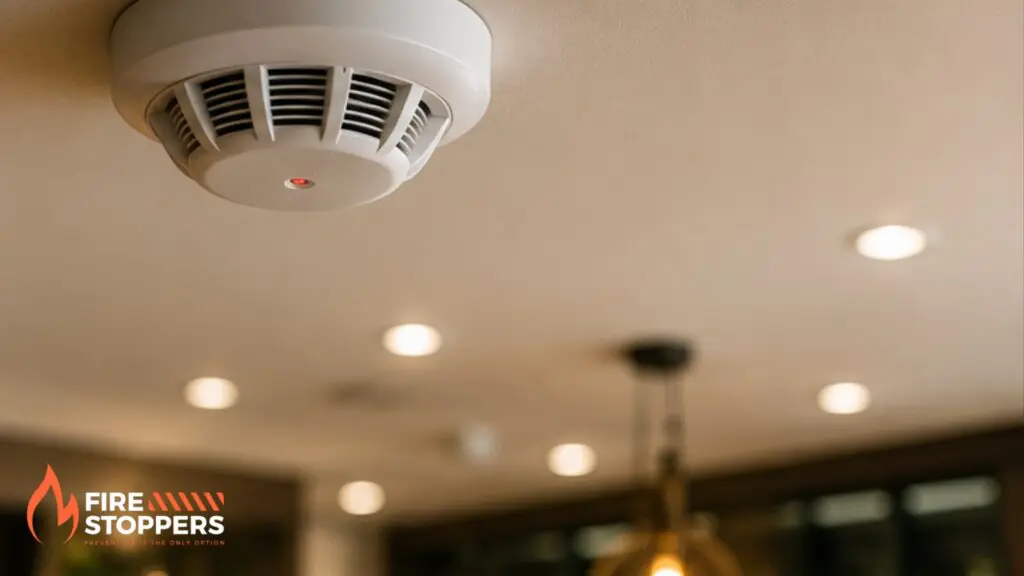
Passive Fire Protection in Hospitality
Active fire protection systems (sprinklers, alarm systems, extinguishers) are what most people think of when they think about fire safety measures. Passive fire protection is the system that works before those components are needed.
Passive fire protection is built into the fabric of the building. It includes fire doors and frames, intumescent seals and strips, fire-resistant boards and coatings, penetration seals around service pipes and cables, cavity barriers, fire dampers in ventilation systems, and fire-resistant glass. Together, these components create compartments within the building: barriers that contain fire and smoke to the area of origin long enough for guests and staff to get out safely and for the emergency services to respond to it.
Compartmentalisation is the reason two rooms side by side in a hotel can have completely different outcomes. It is also the reason that poor passive fire protection can make every other fire safety investment nearly worthless.
In hospitality premises, the most common failures include the following:
| Fire doors that are incorrectly fitted, damaged, or missing intumescent seals | Penetrations through fire-rated walls and floors that were never sealed after electrical wiring, plumbing, or IT works |
| Fire dampers in HVAC systems that have never been tested or are no longer in working condition | Intumescent coatings on structural steel that are damaged or incorrectly specified |
Fire Safety Requirements by Hospitality Type
Fire safety requirements don’t change fundamentally from one type of premises to another, but the specific risks, vulnerabilities, and expected standards do. Here is what each type faces in practice.
Hotels
Hotels carry the most complex fire safety obligations of any property type in the sector because they combine sleeping accommodation, commercial kitchens, public areas with variable occupancy, and, in many cases, conference and event facilities, all under one roof with guests and staff moving through the building at all hours.
The core requirements are a valid fire safety certificate for the building; a current fire risk assessment; functioning fire detection and alarm systems with smoke detectors correctly positioned throughout; maintained means of escape, including fire doors and escape lighting; a fire safety register; and a well-trained staff body that understands procedures.
For hotels, the fire safety register is particularly important. It must record all maintenance of fire safety equipment, all fire drills conducted, all training completed, and any incidents or near-misses. This document is what an inspector will ask to see first, and gaps in it signal that the rest of the management system may be just as incomplete.
Passive fire protection matters enormously in hotels. Compartmentalisation is the ability to contain a fire to one area while guests and staff elsewhere get out safely. It depends entirely on fire doors being correctly fitted, maintained, and kept closed; on penetrations through walls and floors being sealed; and on corridors and escape routes being protected with the right construction standards.
Restaurants and Bars
The primary risk in restaurants and bars is the commercial kitchen. Cooking equipment, extraction systems, and high-heat environments concentrate ignition sources in a way that most other commercial premises don’t face. A grease fire in an incorrectly maintained duct is one of the most common causes of serious fire damage in Irish food and beverage venues.
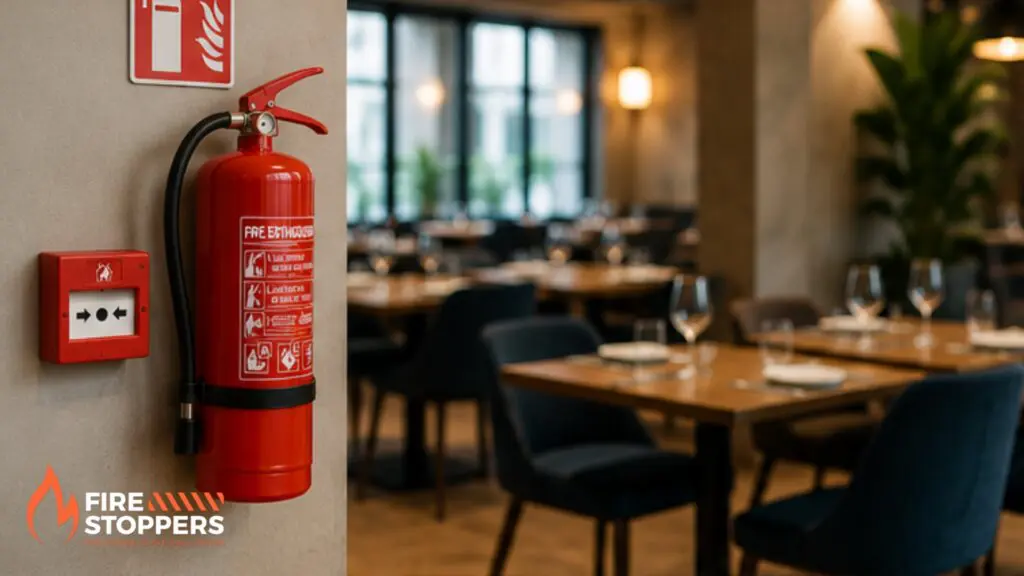
Beyond the kitchen, restaurants and bars must maintain adequate means of escape for maximum occupancy, including during busy periods when fire doors are propped open for ventilation, which is both common practice and a serious fire safety violation. Lighting on escape routes must function even if the main power fails. Fire extinguishers must be correctly specified for the hazards present. A water extinguisher near a chip fryer is not just useless; it is dangerous.
Event Venues
Event venues present variable risk: the same building might hold 50 people for a private dinner on Thursday and 500 for a wedding on Saturday. Fire safety plans must account for maximum capacity, not average occupancy.
Temporary structures, AV equipment, staging, and decorations all introduce additional fire load. Venues need fire safety management plans that are reviewed before each significant event. An audit conducted during a quiet week will not reflect the risk profile during a fully dressed event with full attendance.
B&Bs and Small Accommodation
The Fire Services Act applies regardless of size. A two-bedroom B&B carries the same fundamental obligation to ensure the safety of its guests as a 200-room hotel. The compliance pathway is different, but the duty of care is not.
For smaller accommodation providers, the most commonly missed requirements are interconnected alarm systems that alert guests in time to get out, sufficient escape routes from upper floors, fire doors to habitable rooms, and owner or staff training in emergency procedures. Many small operators in Ireland believe that because they have never been inspected, they are probably fine. The two are not the same thing.
Holiday Parks and Self-Catering Properties
Self-catering and holiday park properties frequently contain older structures with outdated fire safety provision. The presence of solid fuel stoves, portable heating, and LPG cooking introduces specific risks. Where properties are let commercially and guests sleep on-site, the operator’s obligations under the Fire Services Act apply in full.
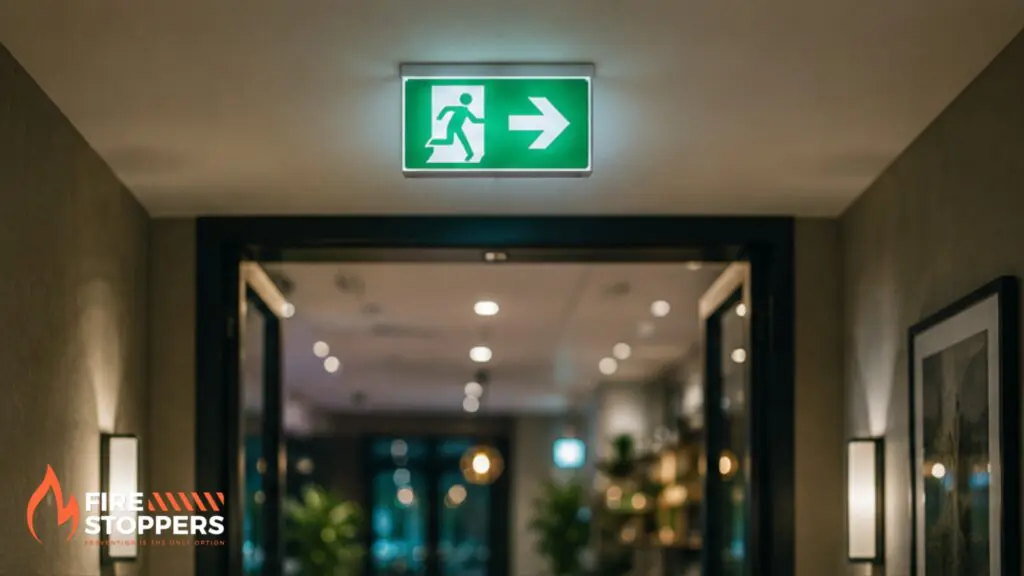
Fire Risk Assessment
A fire risk assessment is a structured review of a premises that identifies fire hazards, considers who may be at risk, and sets out the measures needed to reduce those risks to an acceptable level.
In the Republic of Ireland, there is no legislation that uses the exact same terms as the UK’s Regulatory Reform (Fire Safety) Order 2005, but that does not make fire risk assessments optional. The Fire Services Acts require persons in control of premises to take all reasonable measures to protect occupants, and workplace health and safety law requires employers to assess risks, including fire. A fire risk assessment is the key documented record that you have met these obligations. Without one, you will struggle to demonstrate compliance during an inspection, and you increase your exposure if an incident occurs.
A professionally conducted fire risk assessment will cover:
- identification of ignition sources and combustible materials across the premises
- assessment of structural fire protection, including walls, floors, ceilings, and service penetrations
- condition and adequacy of fire detection and alarm systems, including smoke detectors and manual call points
- escape routes, including widths, lengths, signage, emergency lighting, and door hardware
- passive fire protection elements such as fire doors, intumescent seals, cavity barriers, and penetration stopping
- management controls, including the fire safety register, training records, and maintenance schedules
- any specific risks arising from the occupancy type, hours of operation, and presence of sleeping accommodation
The output is a written report with a prioritised action plan. The assessment is useful, but the remedial works are what actually protect the building and the people in it. Where practical, it is often best to use the same competent provider for the assessment and the remedial works, so that recommendations are clearly understood and can be implemented efficiently.
The assessment should be reviewed whenever there is a material change to the premises, such as refurbishment, a change of use, or a significant increase in occupancy. As a matter of good practice, it should be reviewed formally at regular intervals, typically every three to five years, or sooner if the risk profile changes.
Many fire safety issues are not visible during a routine inspection and are only identified during a dedicated fire risk assessment or passive fire protection audit. Getting fire safety right typically involves inspection, targeted remedial works, and documented sign-off, with minimal disruption to operations and a permanent improvement to safety.
Staff Training and Fire Emergency Procedures
Every person working in a hotel, restaurant, or other hospitality premises needs to know what to do if a fire starts. In practice, this is one of the most consistently under-resourced areas of fire safety in Ireland.
Irish legislation requires that staff receive instruction and that emergency response procedures are regularly tested. For premises with sleeping accommodation, the frequency and documentation of this testing are taken seriously by enforcement authorities.
Training should cover:
| How to raise the alarm and where manual call points are located | Evacuation procedures, including assembly point locations | The role of designated fire wardens and their responsibilities |
| How to use fire extinguishers, and when not to attempt to fight a fire | Room and area checking procedures before completing evacuation | How to communicate with and assist the emergency service on arrival |
A fire drill should be conducted at least annually, with more frequent testing for premises with high staff turnover or complex layouts. The date, time, number of staff involved, and any issues identified must go into the fire safety register.
Fire safety preparedness also means planning for the scenarios most likely to catch you out: a quiet night with skeleton staffing, a new starter on their third shift, or a full house of guests who have never seen the building before. These are the conditions that reveal whether your procedures actually work and whether your team knows the building layout well enough to guide guests out under pressure. for more info go to hsa.ie
Fire Prevention Measures and Ongoing Maintenance
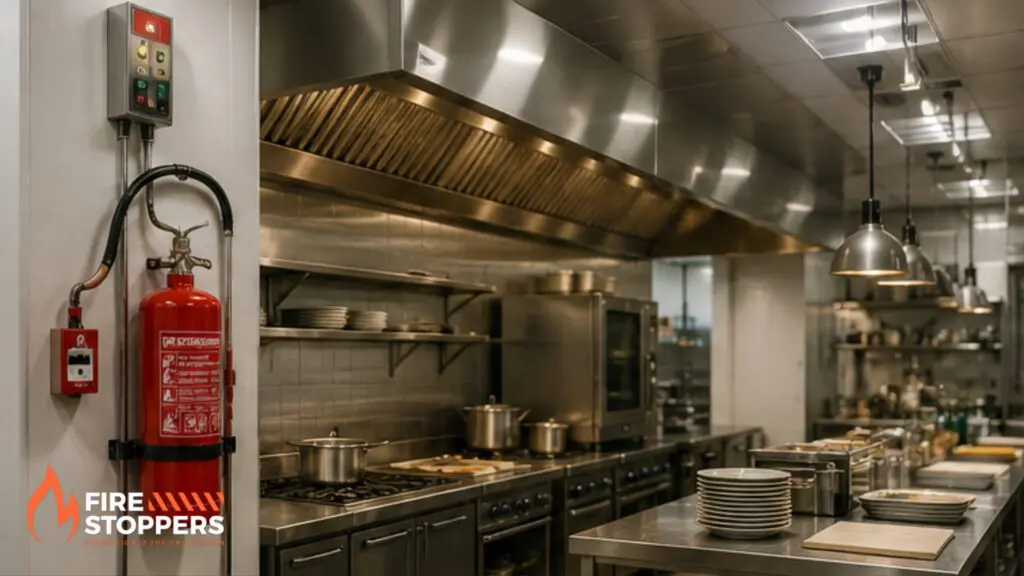
The most effective way to improve fire safety on any hospitality premises is to treat it as an ongoing operational discipline, not a one-time project. Maintaining them is just as important as putting them in place.
Key areas that require ongoing attention include:
Regular inspections of cooking equipment and extraction systems. Grease accumulation in ducting is one of the most preventable causes of serious kitchen fires. Professional cleaning and inspection of extraction systems on a documented schedule is standard practice in well-run commercial kitchens.
Testing and maintenance of detection and alarm systems. Smoke detectors and alarm devices need periodic checks to confirm they are functioning correctly. A detector that has been painted over, moved, or simply failed without anyone noticing is no protection at all.
Fire door condition checks. Fire doors are only effective if they close fully, latch correctly, and have intact intumescent seals. Doors that are wedged open, damaged, or incorrectly hung provide no compartmentalisation benefit whatsoever.
Electrical systems maintenance. Electrical wiring in older hospitality premises warrants periodic inspection, particularly when additional equipment has been added over time. Overloaded circuits and failing connections are a controllable risk.
Combustible waste. Accumulated rubbish in storage areas, plant rooms, or near external walls increases fire load significantly. Keeping these areas clear and documenting your procedures reduces this risk at minimal cost.
Taking this kind of disciplined approach reduces the likelihood of an incident and significantly improves your position if an enforcement inspection occurs.
Fire Safety Compliance Checklist for Hospitality Premises
This checklist covers the minimum requirements for most hospitality premises in Ireland. It is a reference tool, not a substitute for a professional fire risk assessment.
| Documentation and management: Valid fire safety certificate in place (where required) Current fire risk assessment conducted by a competent person Fire safety register maintained and up to date Staff training records documented Records of all fire safety exercises documented |
| Detection and alarm: Fire detection and alarm system in place and maintained Smoke detectors correctly positioned and tested Manual call points accessible and clearly signed Emergency lighting installed and in working order System log maintained with dates of regular checks |
| Means of escape: Emergency exit signs in place, illuminated, and clearly visible Emergency exits operational and hardware (push bars and magnetic releases) in working condition All means of escape clear, unobstructed, and of adequate width Lighting covers all escape routes and stairwells |
| Passive fire protection: All fire doors correctly fitted, self-closing, and undamaged Intumescent seals in place on all fire door frames No fire doors propped open All penetrations through fire-rated walls and floors sealed Fire dampers in HVAC systems tested and recorded Intumescent coatings on structural steel inspected and intact |
| Equipment: Fire extinguishers correctly specified, positioned, and in date Fire blankets in kitchen areas Sprinkler systems and suppression systems maintained and serviced (where installed) CCTV and security systems reviewed as part of overall safety and compliance planning |
| Staff: All staff trained in evacuation procedures Fire wardens designated and trained Out-of-hours response procedures documented and understood Waste management procedures in place to prevent accumulation of combustible waste |
What Happens After a Fire Safety Audit
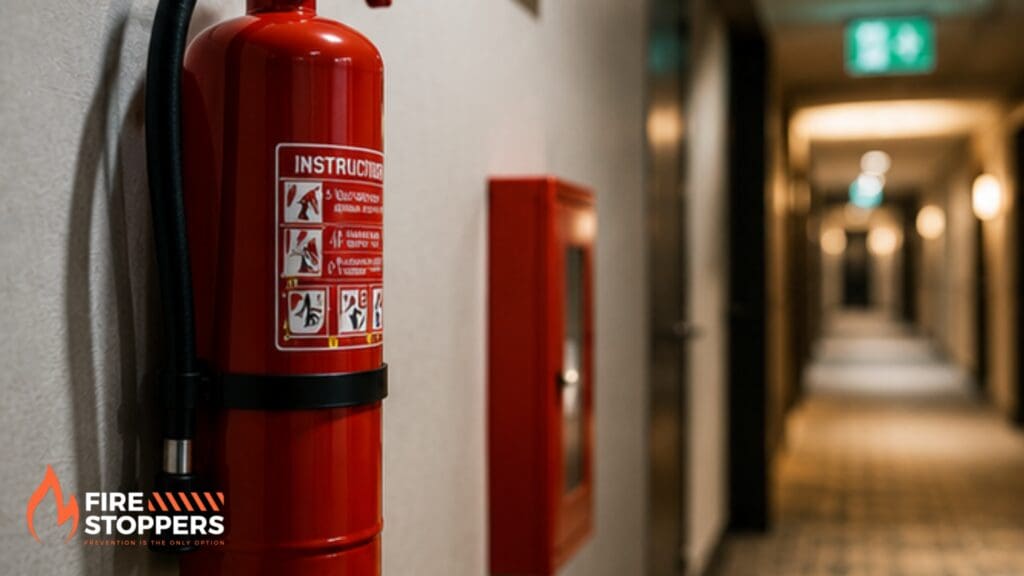
A fire safety audit produces a report. That report lists findings in order of priority, from matters requiring immediate action to longer-term recommendations.
The step that many operators miss is treating the report as an end point rather than a starting point. An audit that identifies problems but does not result in remediation works has not made your building safer. It has created a documented record that you were told about the problems and chose not to act. That is considerably worse than having no audit at all.
Remediation works following an audit typically fall into several categories. Some are straightforward: replacing a missing seal, removing a prop from a fire door, updating exit signage. Others are more involved: sealing penetrations through fire-rated construction, replacing defective fire doors, installing passive fire protection on structural steel, or commissioning damper testing across a full HVAC system.
In most cases, a passive fire protection specialist can work through a premises with minimal disruption to operations. Areas are worked in rotation. Certification and sign-off documentation is provided at the end, giving you demonstrable proof of compliance for insurers, enforcement authorities, and building owners.
The audit and the remediation should be treated as a single process, ideally handled by the same provider, so that inspection findings translate directly into scoped, costed works without ambiguity or delay.
The Consequences of Non-Compliance
Enforcement of fire safety legislation is the responsibility of local fire authorities, whose officers have statutory powers to inspect any premises at any time, without notice, and to take immediate action where obligations are not being met.
Enforcement takes several forms. An improvement notice requires specific remedial actions within a stated timeframe. A prohibition notice restricts or closes the premises until compliance is demonstrated. Prosecution under the Fire Services Acts can result in a fine and, in serious cases, imprisonment.
The consequence most immediately felt by hotel and restaurant operators is the prohibition notice: a closure order that shuts all or part of your premises until you can demonstrate compliance with fire safety regulations. The commercial impact of even a brief closure is severe. The reputational damage of a public enforcement action takes considerably longer to recover from, particularly in an industry where online visibility is critical to bookings and reservations.
Non-compliance also affects insurance premiums and claim outcomes. Insurers may decline to meet a claim or significantly reduce the settlement if investigation reveals that obligations were not being met at the time of an incident.
Comprehensive fire safety compliance is not a bureaucratic exercise. It is what stands between your guests and staff and a preventable catastrophe and between your business and an outcome from which many hospitality operators do not recover.
How Firestoppers Can Help
Firestoppers are Ireland’s leading passive fire protection specialists, working across the full range of properties in the sector: hotels, restaurants, bars, event spaces, B&Bs, and holiday parks.
We carry out fire safety audits, fire risk assessments, and passive fire protection installation and remediation works. We cover the full process: assessment, scoped proposal, installation, and certification. One team, from audit to sign-off.
We operate nationwide, with a primary base in Dublin and active teams working across Cork, Limerick, Wexford, Kilkenny, Wicklow, Donegal, and every other county. We work Monday to Saturday to fit around the operational requirements of working hospitality businesses.
If you want to understand your current position, have received findings from a recent inspection, or simply want to know what proper compliance with fire safety standards looks like for your specific premises, call us on 01 816 5587 or email info@firestoppers.ie.
We’ll tell you what you need, what it involves, and what it costs. Without the runaround.