Fire door safety is one of the most critical and most overlooked elements of any building’s protection plan. Whether you’re a homeowner or managing a commercial property, Firestoppers provides expert fire protection for both residential homes and commercial buildings across Ireland.
In this post, you’ll learn exactly how fire doors work, what Irish law says about them, and why skimping on fire door installation could cost you far more than money.
How Fire Doors Enhance Fire Safety in Buildings
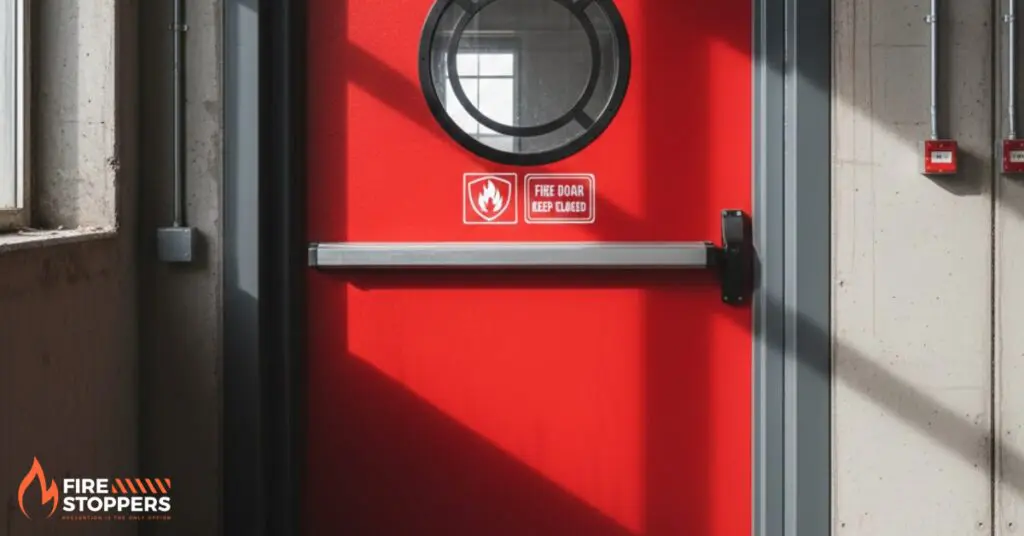
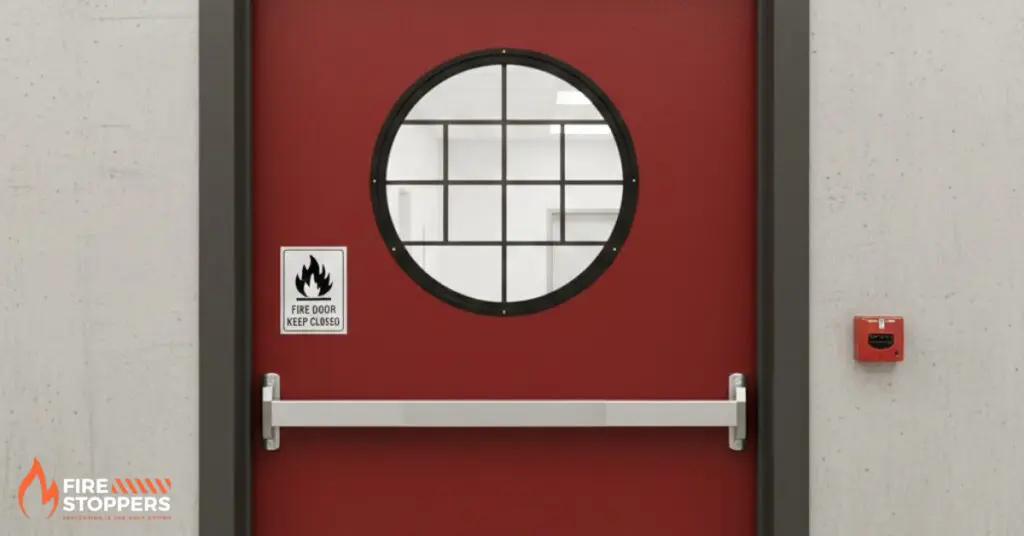
A fire door isn’t just a heavy door. It’s a tested, certified system. The door, frame, seals, and ironmongery all work together. Remove one element, and the whole thing can fail.
1. They Slow the Spread of Flames
This is the big one. A fire door acts as a physical barrier between compartments of a building. It stops flames crossing from one room or floor to another.
‘Compartmentation’ is the technical term for this. Irish building regulations under Part B of the Building Regulations 1997 (as amended) require it in most multi-occupancy and commercial buildings. The idea is simple. Contain the fire and limit the damage.
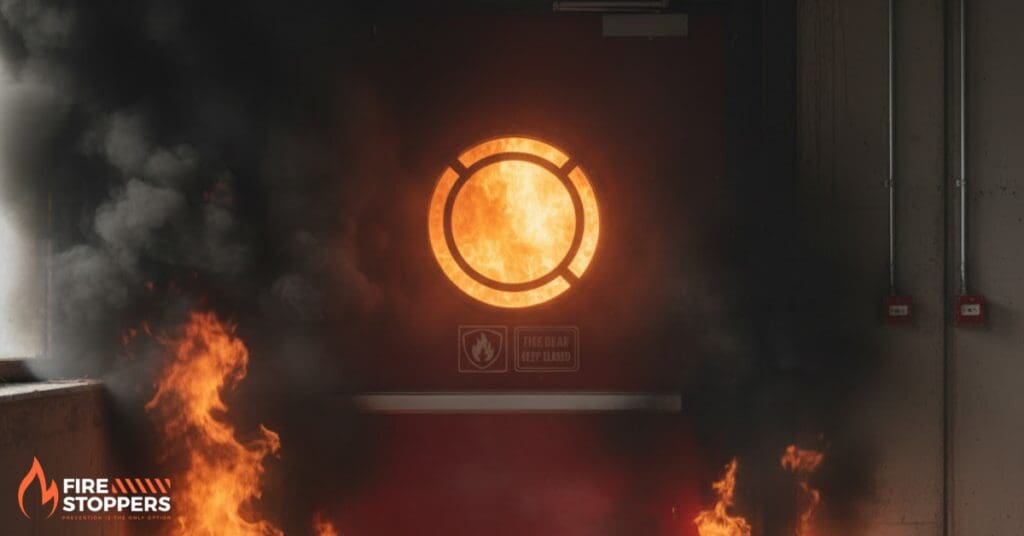
In a real scenario, an FD60 door between a kitchen and a corridor gives occupants a full hour to evacuate safely.
2. They Keep Smoke Out.
Fire doors fitted with intumescent strips and cold smoke seals stop smoke travelling through gaps. The intumescent strip expands when it hits heat, sealing the frame. The smoke seal works from the moment fire breaks out, even before temperatures rise.
If you’re specifying fire doors for an Irish commercial building, make sure both seals are present. One without the other isn’t enough.
3. They Protect Escape Routes
Under Irish fire safety law, escape routes must be protected. That means corridors, stairwells, and lobbies in apartment blocks, hotels, and offices need fire doors that self-close properly.
A fire door propped open with a wedge is completely useless. This is one of the most common compliance failures found during passive fire safety audits. A door closer costs about €60 to €80 fitted, yet the problem is everywhere.
Protected escape routes are what allow people to walk out calmly instead of running through smoke.
4. They Give Fire Services Time to Work
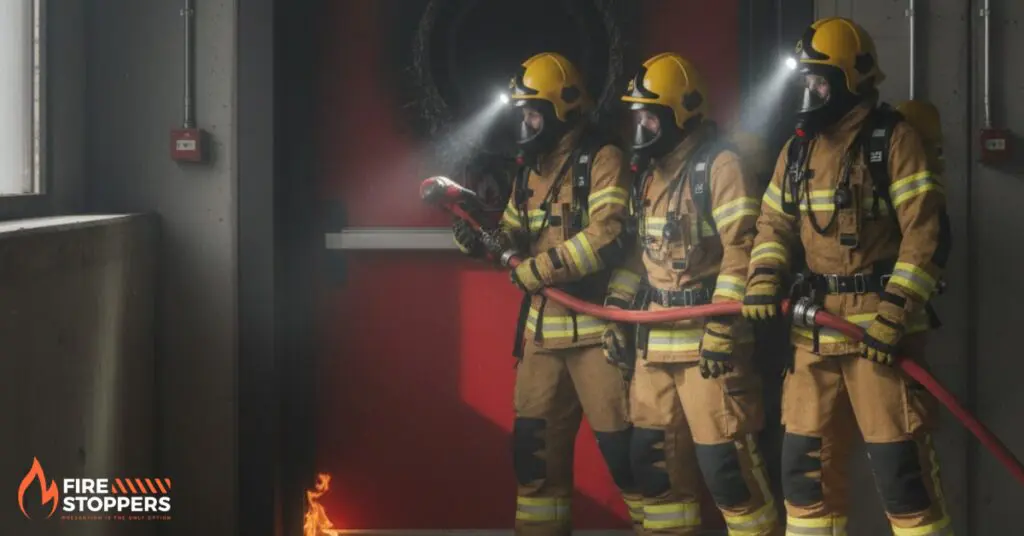
When Dublin Fire Brigade or any county fire service arrives, they need the fire contained enough to fight safely. A building with proper fire door compartmentation gives crews manageable conditions.
A building without them? The fire has often spread too far by the time crews arrive. That’s when you see total losses.
FD60 doors in high-risk areas like plant rooms, boiler houses, and electrical switchrooms can be the difference between a contained incident and a structural write-off.
5. They’re a Legal Requirement in Many Irish Buildings
For apartments and multi-unit developments, scrutiny has increased significantly following the building defects crisis. Many blocks are now going through the Interim Remediation Scheme, and fire door compliance is a key inspection point.
If your building is found to have non-compliant or missing fire doors during an inspection, you’re looking at enforcement notices, potential closure orders, and personal liability.
6. They Protect Property Value
A fire door isn’t just a safety feature. It’s an asset protection measure. Insurance companies in Ireland increasingly require evidence of passive fire protection compliance before paying out on claims.
If a fire occurs and the investigation finds fire rated doors were non-compliant or missing, your insurer may refuse the claim entirely. That can mean six- or seven-figure losses with no cover.
Proper installation by a certified contractor who has been in the fire door and joinery industry for over 20 years gives you a paper trail that stands up to scrutiny. Every fire rated door we supply and install is a fully certified fire door built to meet building regulations, so your documentation is solid from day one.
7. They Require Proper Maintenance to Work
- Annual fire door inspections are recommended for commercial buildings and twice-yearly for schools, hotels, and apartment blocks. FD30 doors are the baseline building regulations requirement across most of these settings, meaning 30 minutes of fire and smoke resistance as a minimum. The cost of an inspection is minor compared to the liability of a door that fails during a fire.
- You can check basic safety compliance yourself. Close the door and look for visible light around the frame. If you can see daylight, smoke can get through.
What Does a Fire Door Inspection Cost in Ireland?
That’s a fraction of what non-compliance costs you if something goes wrong.
Firestoppers offer fire door inspections across Dublin and throughout Ireland. You can reach them on +353 01 8165587 or at firestoppers. i.e., they operate Monday to Saturday, 8am to 6pm